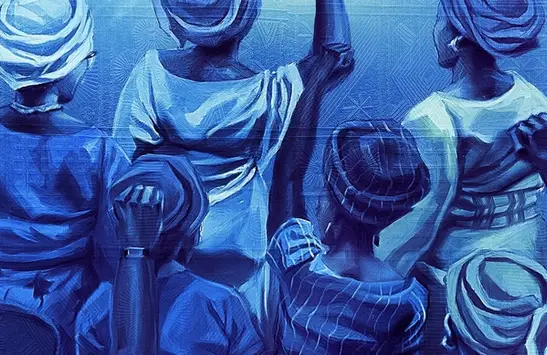


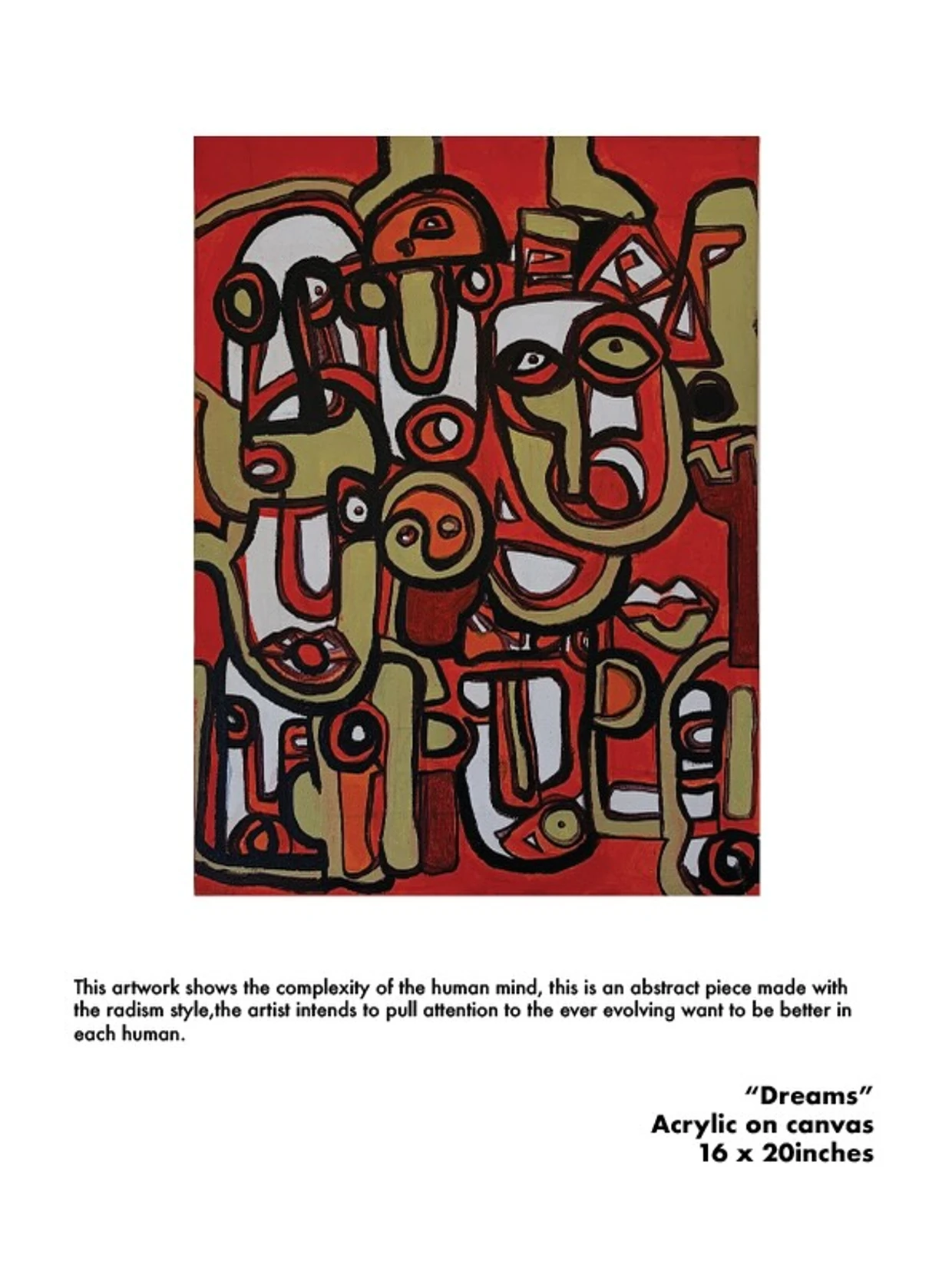
There is something immediately recognisable about the characters Nigerian artist Olombeni Pere creates. They have exaggerated features, angular faces, unusual hairstyles, and bodies stretched into proportions that don't quite follow the rules of anatomy. They're often dressed in colourful patterned clothing, oversized accessories, and carefully assembled outfits. Some appear relaxed and completely at ease, while others seem caught in the middle of strange or humorous situations. Known through his creative practice as Rad, Olombeni has developed an approach to drawing and painting that embraces distortion, bright colours, and expressive linework. He calls this evolving style Radism, a form of abstraction he developed around the use of lines and colours to tell stories.
A graduate of Fine and Applied Arts from Obafemi Awolowo University, where he majored in graphic design and minored in painting, Olombeni works across traditional and digital media. His background helps explain the relationship between the structured compositions of his paintings and the more illustrative qualities of his character designs.
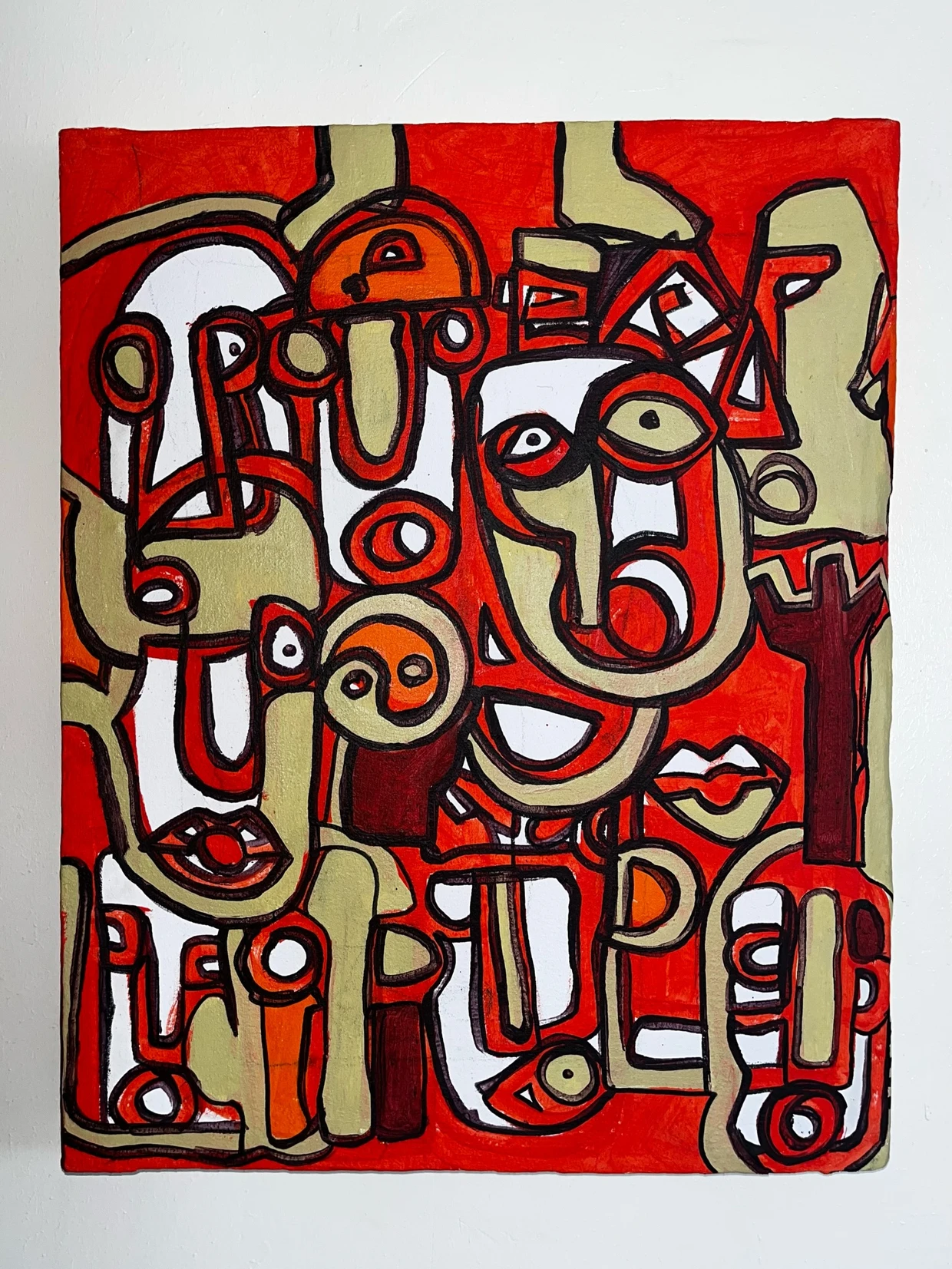
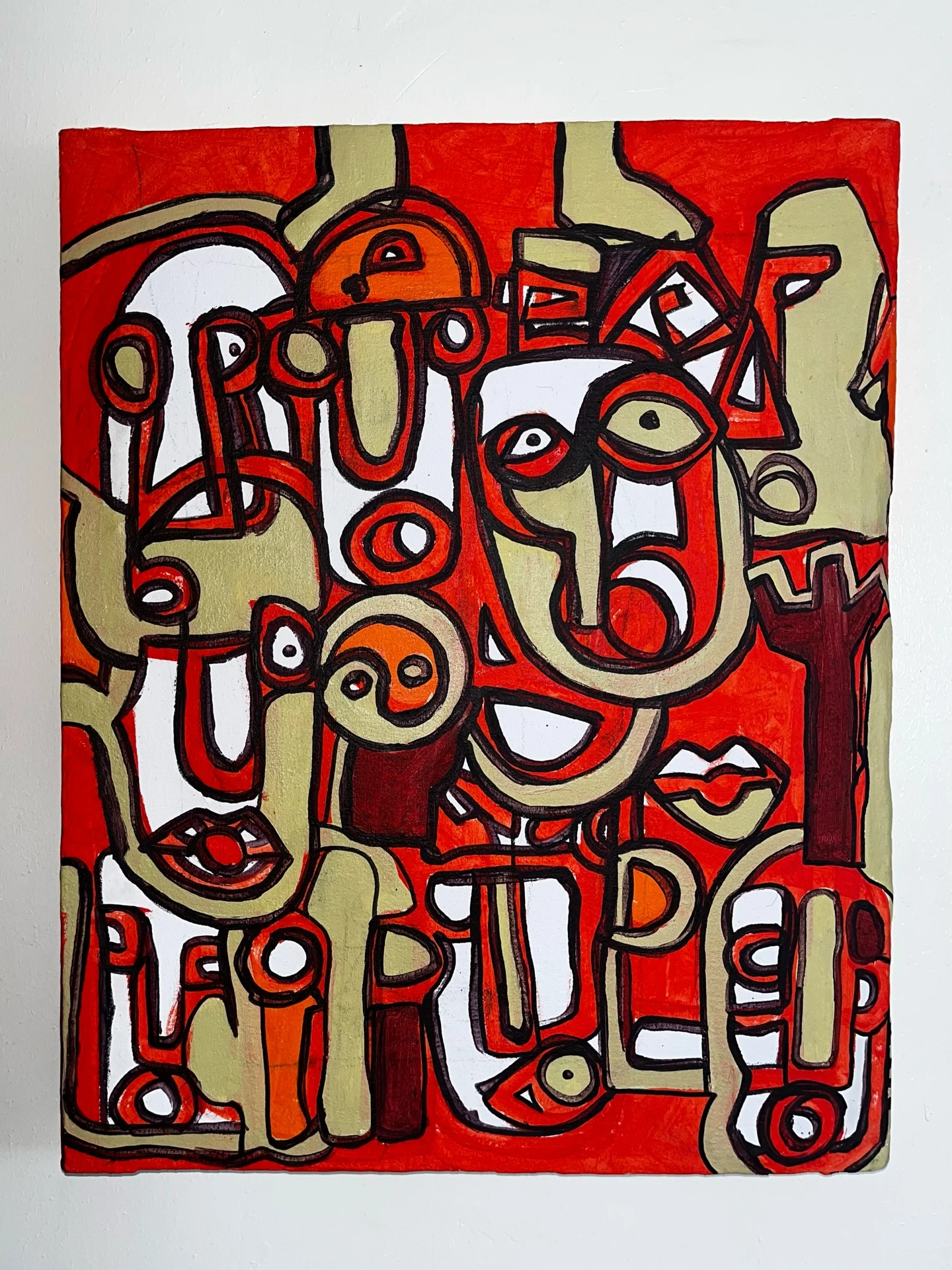
One of the most interesting aspects of his work is how much personality he can communicate by changing the proportions of a face or body. Noses become long and angular, eyes sit at unusual angles, and heads take on shapes that would appear impossible in a realistic portrait. Rather than making the characters difficult to recognise, these exaggerations give each one a particular attitude. Some appear confident, others tired, contemplative, amused, or indifferent. Their expressions are often subtle, but the combination of posture, clothing, and facial features gives viewers plenty to interpret.
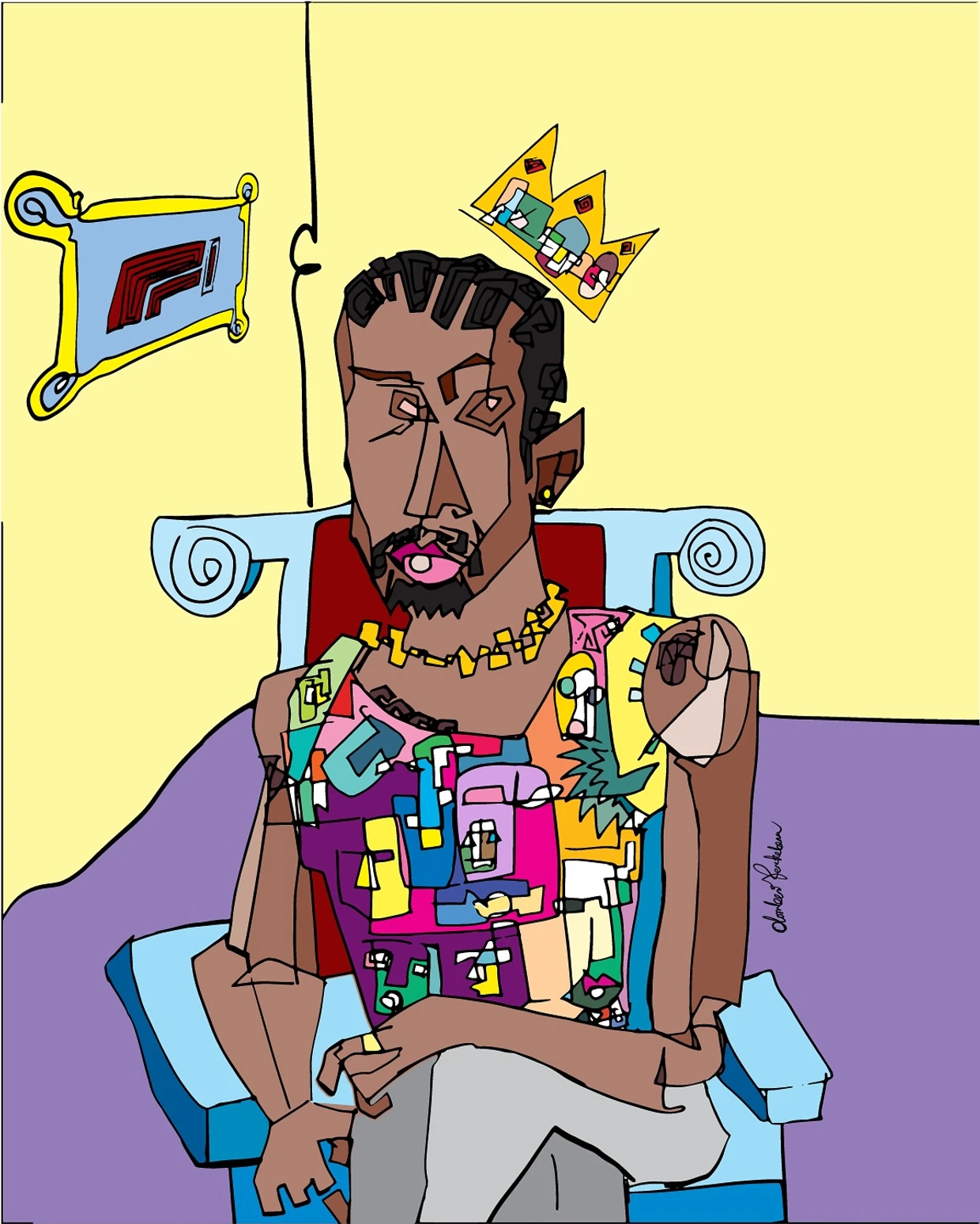
His linework is central to this effect. Strong black outlines separate figures from their surroundings, while thinner marks establish expressions, clothing details, and the objects that populate each scene. The lines can feel loose and playful, but they also provide structure for compositions filled with overlapping shapes and patterns. This is particularly noticeable in illustrations where figures are surrounded by complicated environments. Buildings, signs, household objects, and abstract forms compete for space, yet the main characters remain easy to identify. Olombeni manages this through contrast, silhouette, and the placement of colour.
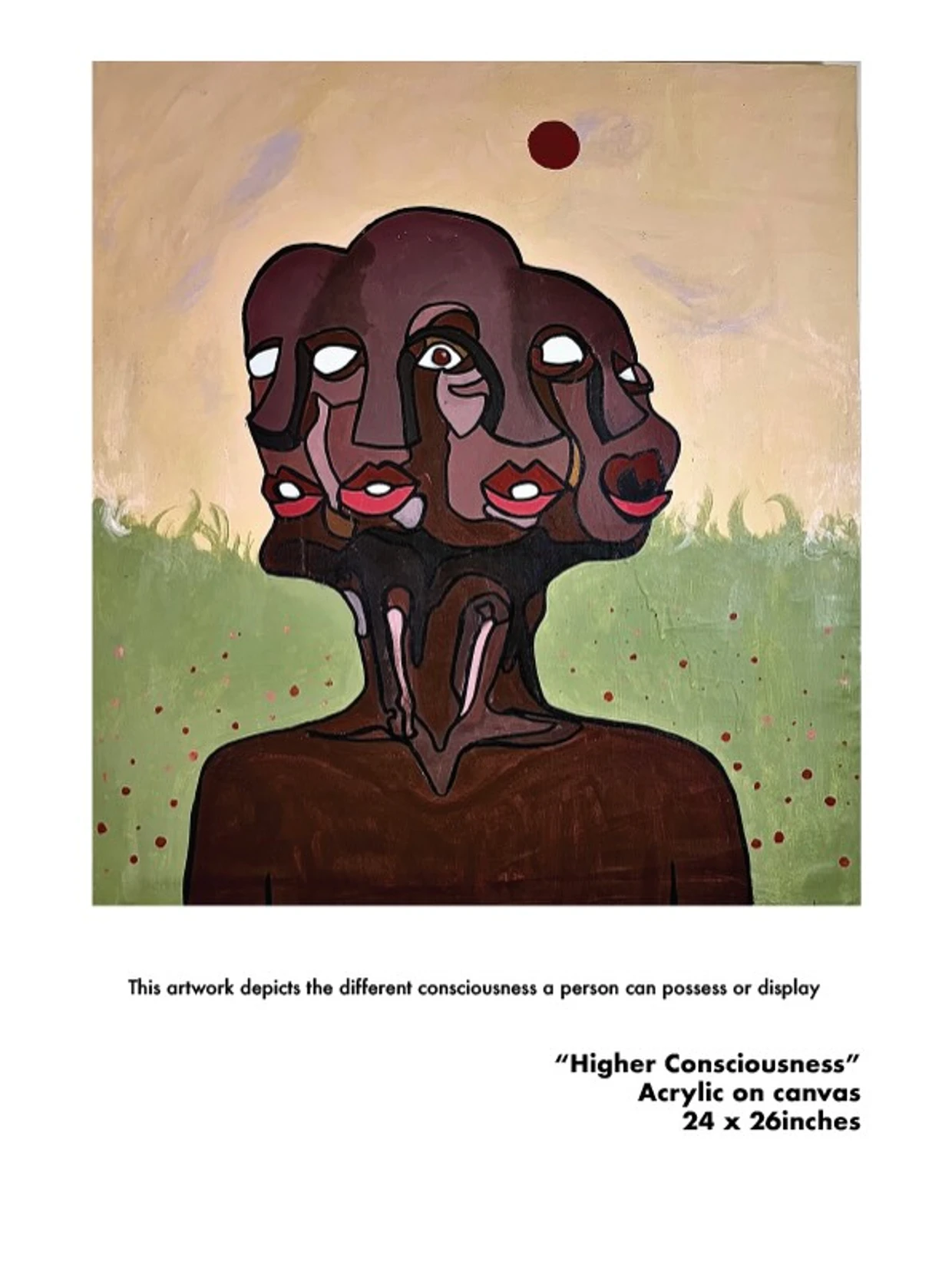
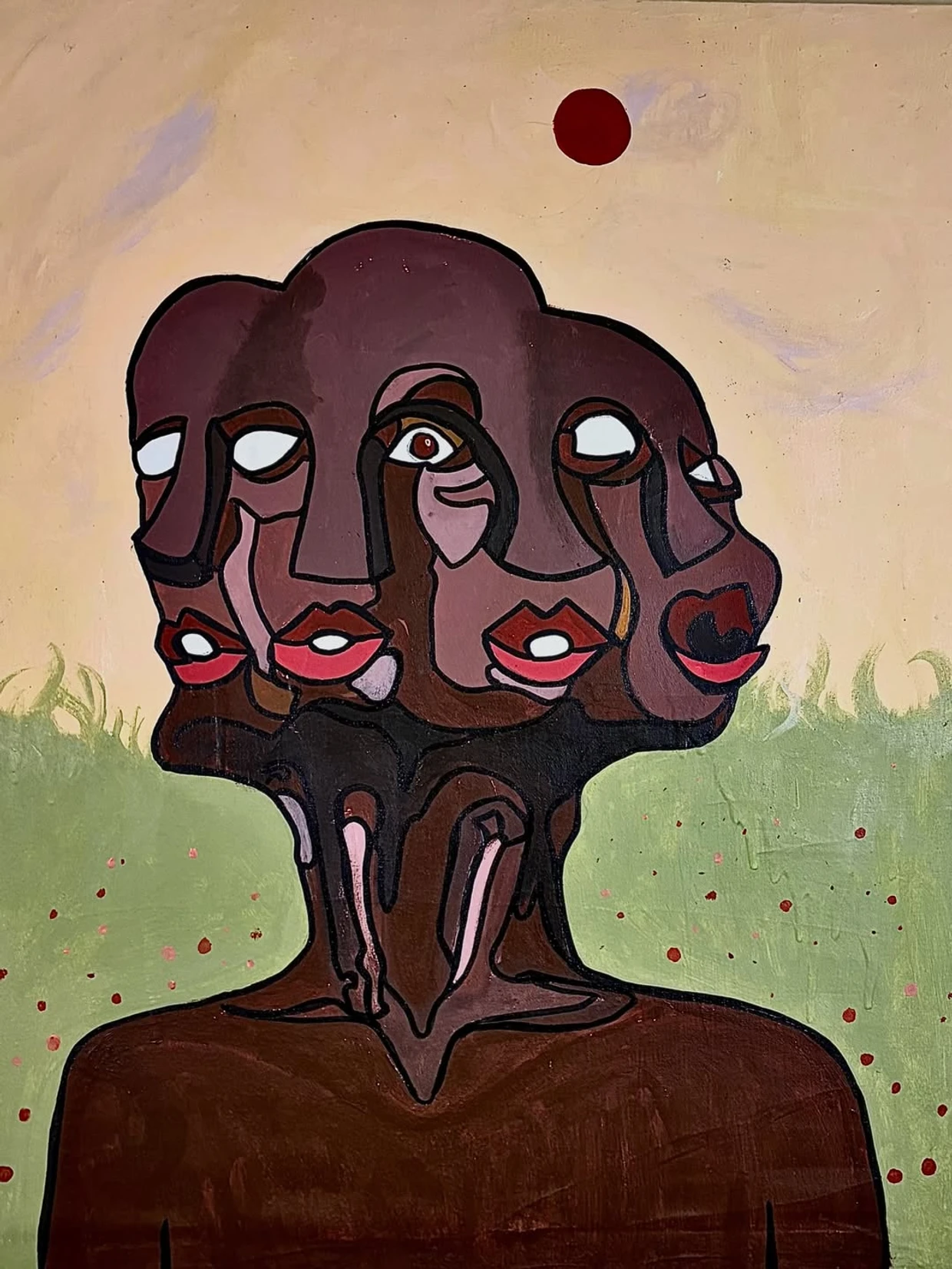
Colour is another defining feature of his practice. Bright yellows, blues, oranges, pinks, greens, and purples appear throughout the illustrations, often arranged in large, relatively flat areas. Rather than relying heavily on realistic shading, he allows these colours and their relationships to establish the atmosphere of each scene.
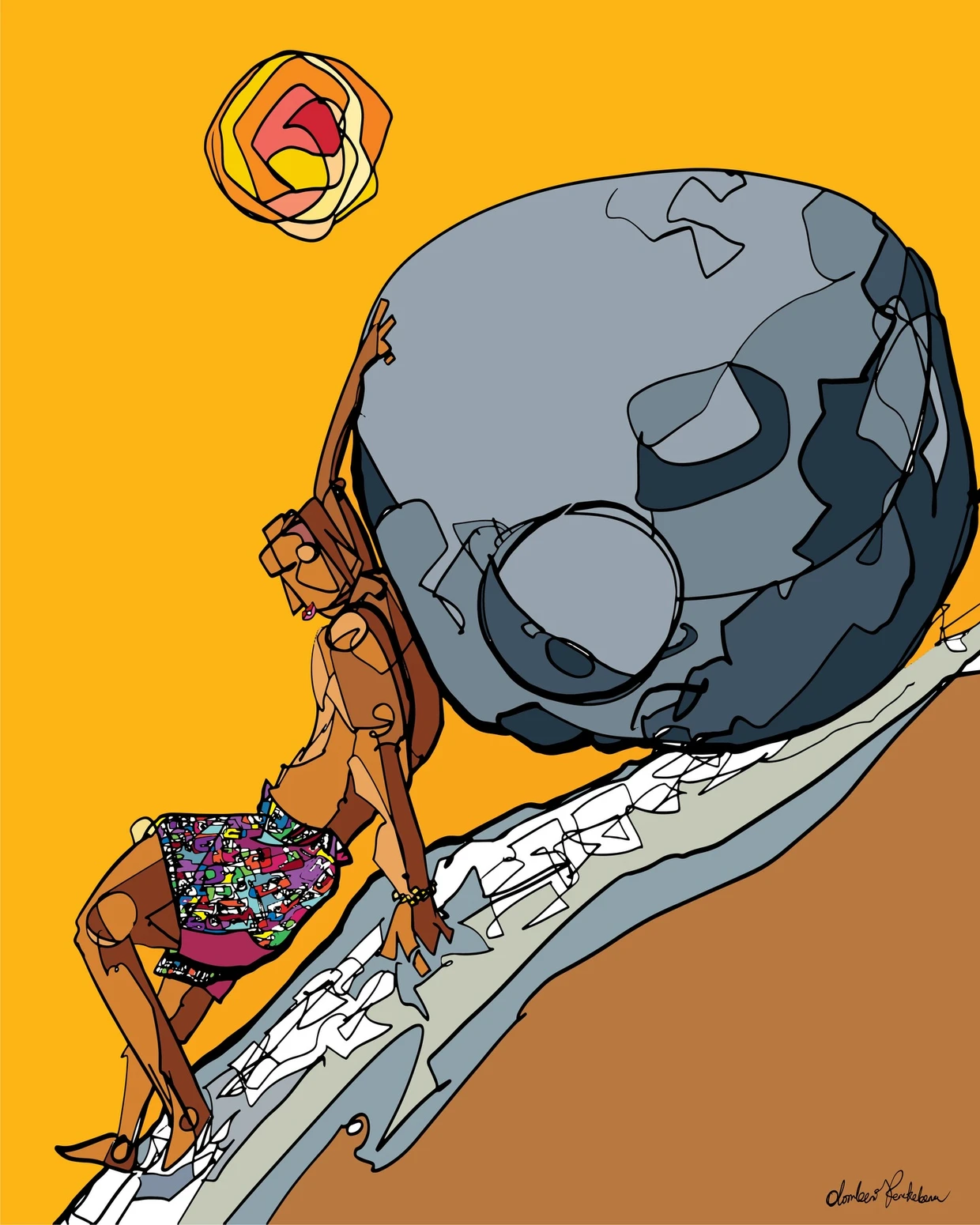
His work Faces, for example, explores sonder, the recognition that every person has an inner life as complicated as one's own. The idea is well suited to an artist interested in distorting faces without losing their individuality. Each expression can suggest a different personality, experience, or emotional state, even when the features are far removed from realistic proportions. Other works, including Dreams and The Resilient Man, extend his interests into more personal and reflective subjects. They show how a visual style associated with playful characters and energetic colours can also provide room for more serious questions about human experiences.
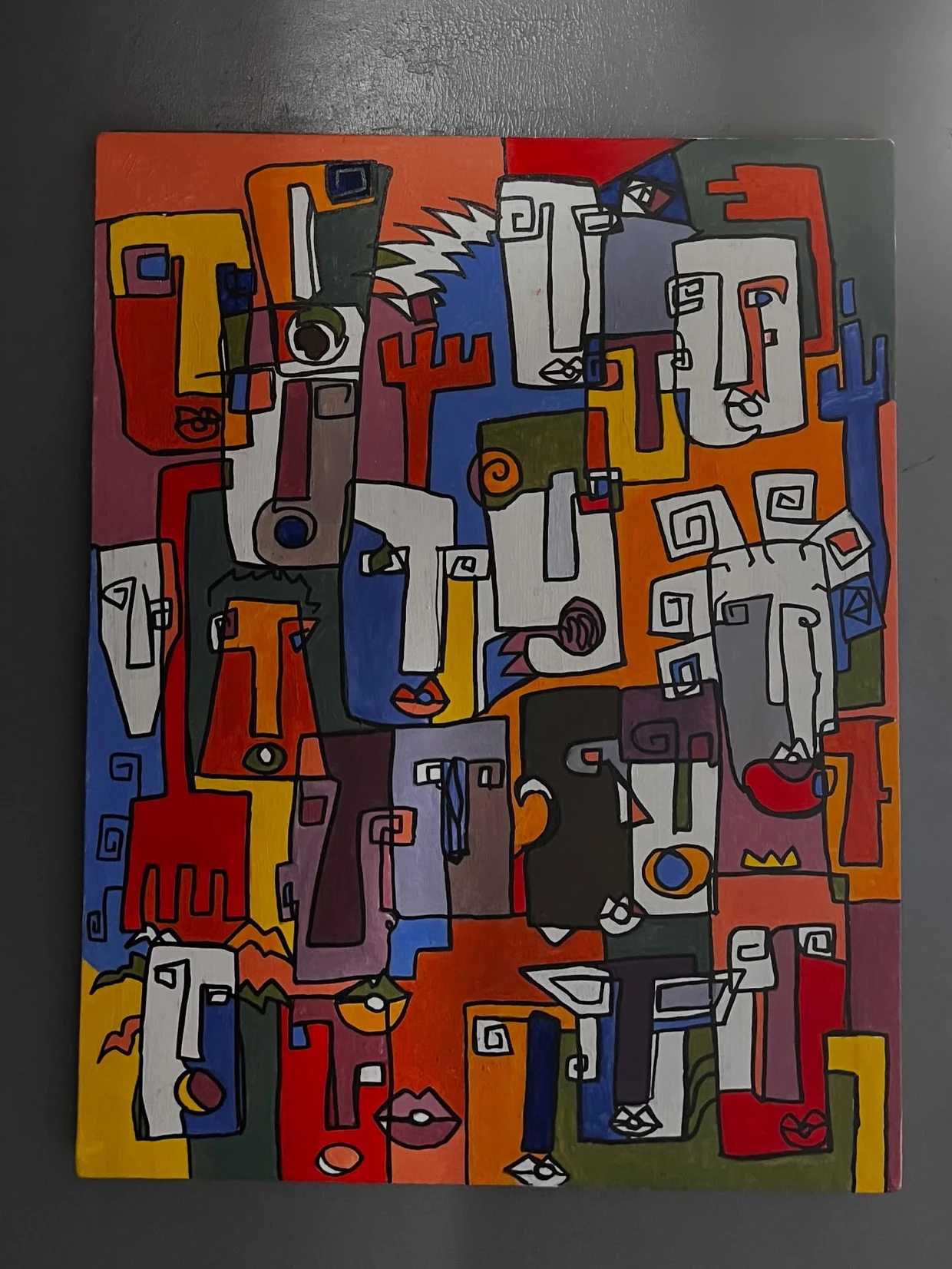
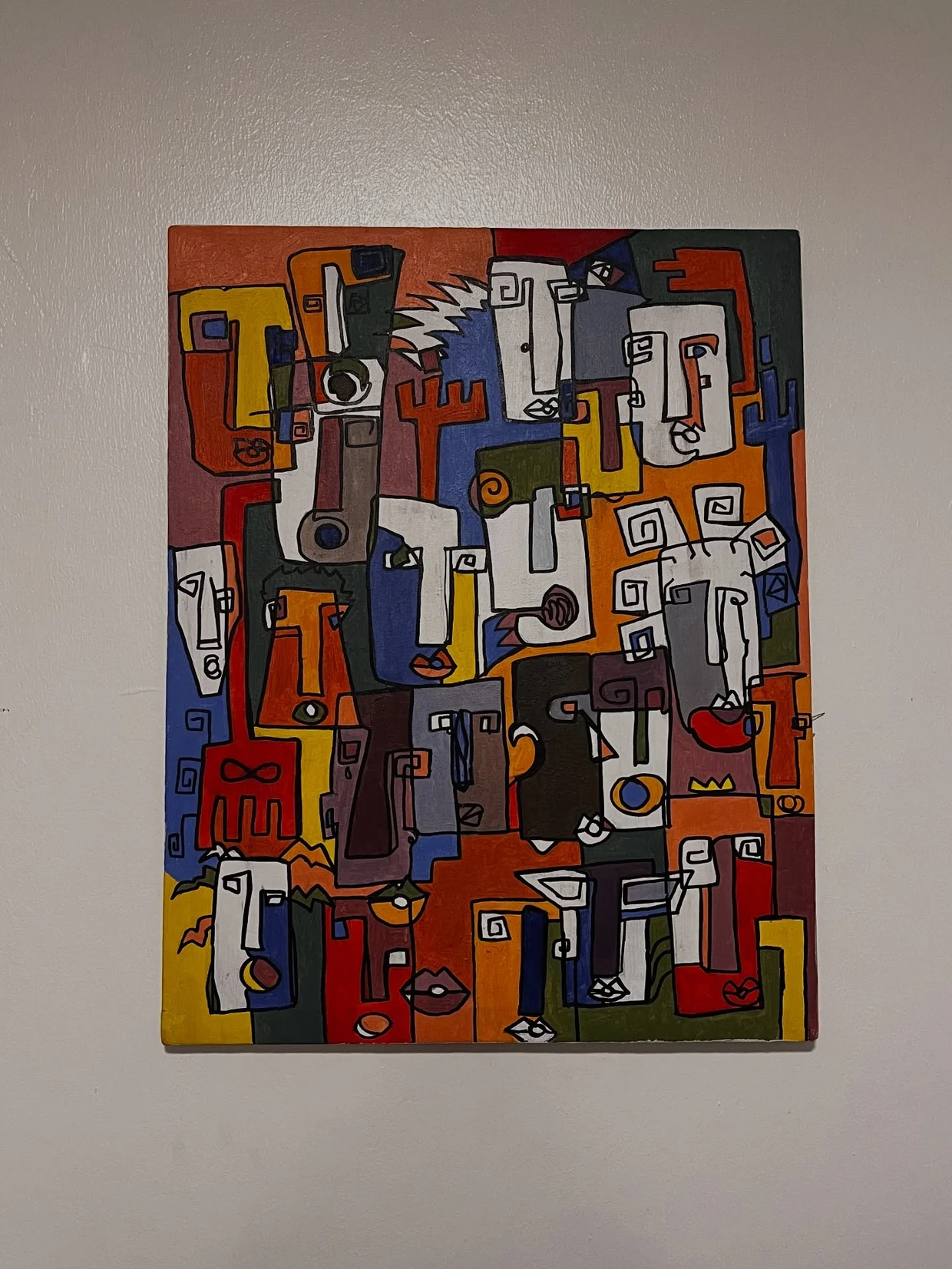
There is a noticeable sense of freedom in the way Olombeni approaches these elements. Faces don't have to be symmetrical, buildings don't have to follow conventional perspective, and colours don't have to imitate the natural world. These departures from realism give him room to emphasise whatever interests him most about a subject.
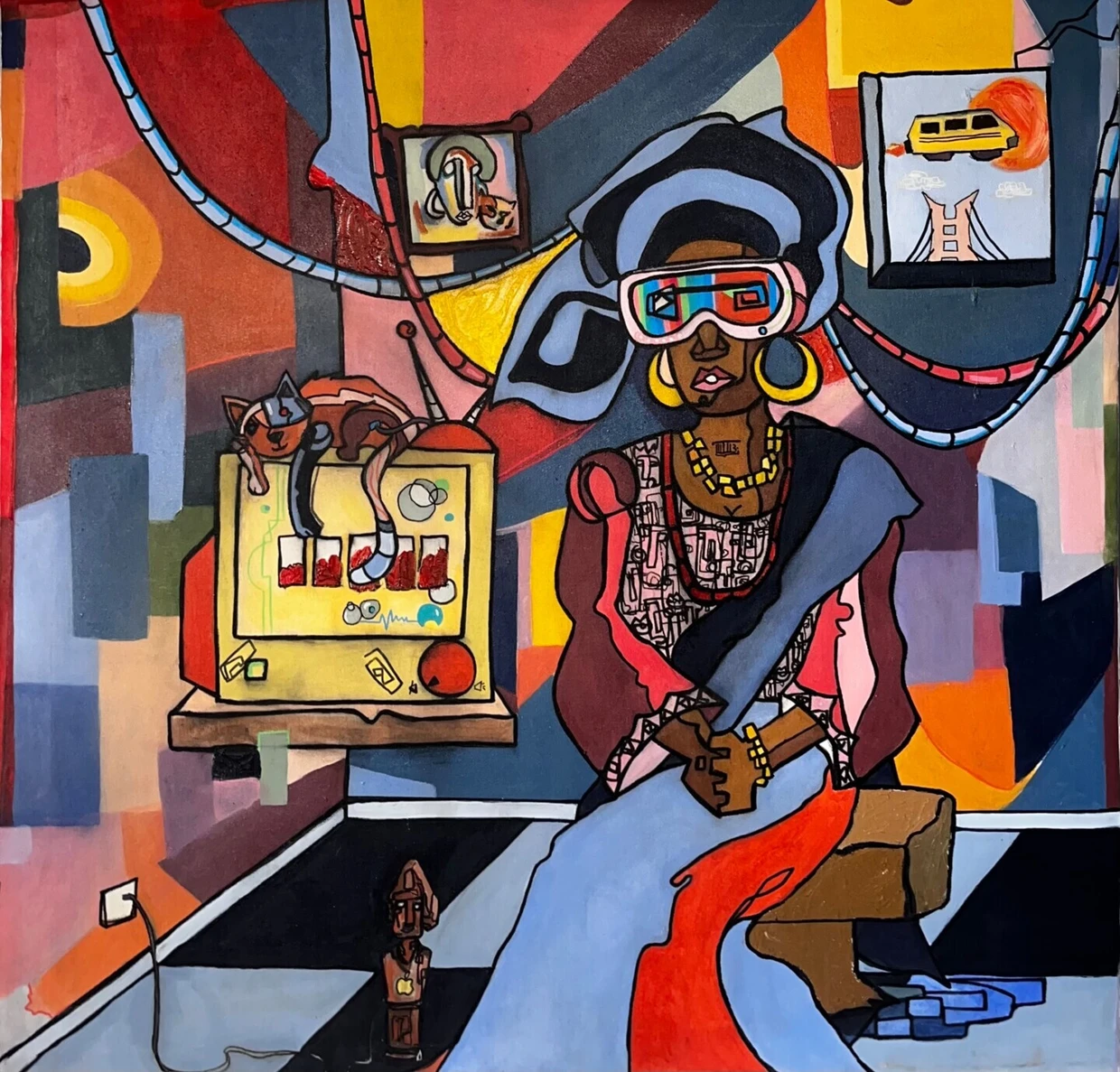
Through Radism and his wider illustration practice, Olombeni Pere continues to experiment with how much can be communicated through the simplest elements of drawing: a line, a shape, a colour, or an expression. His characters may inhabit unusual worlds, but their personalities, habits, and attitudes remain recognisably human.