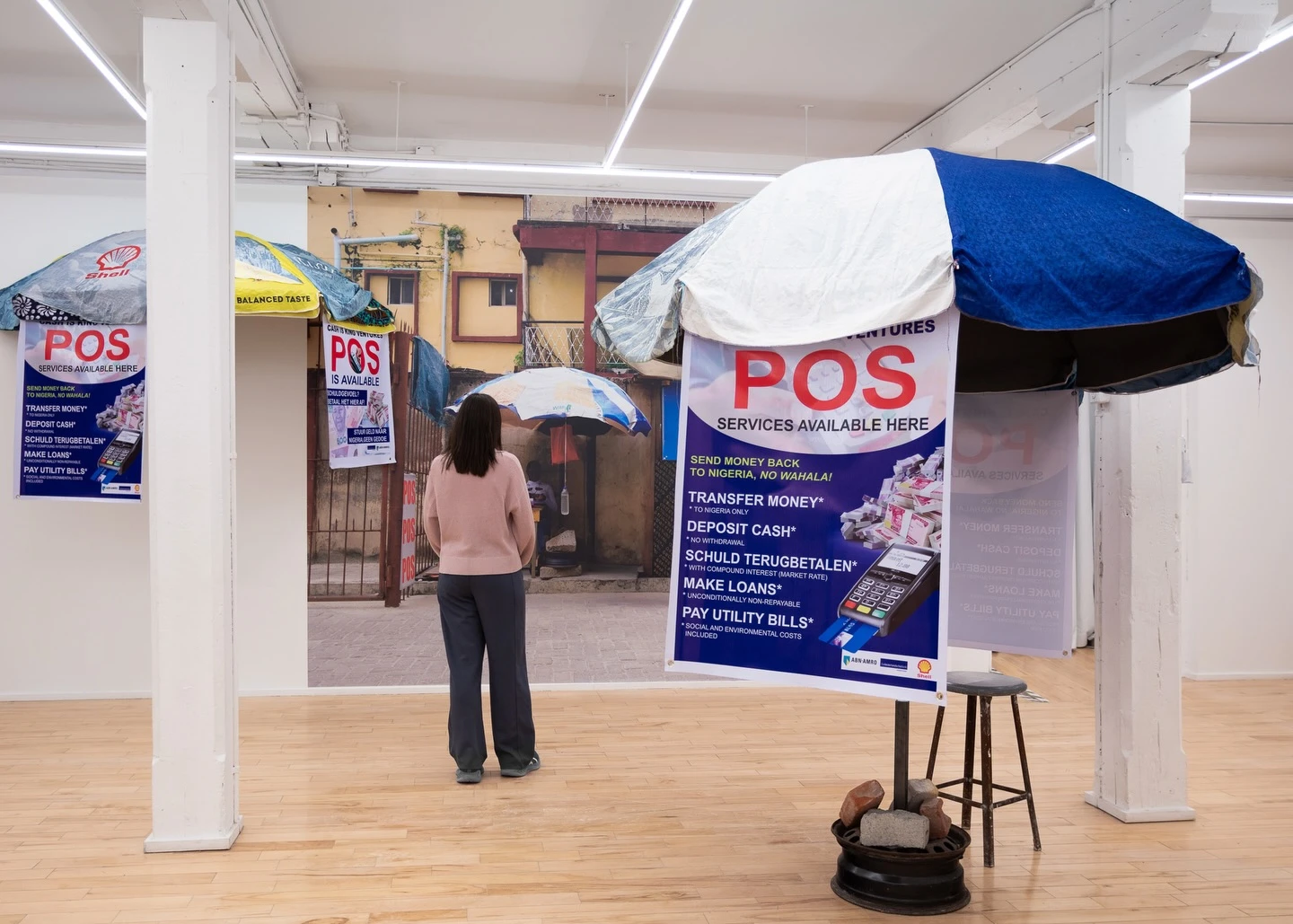


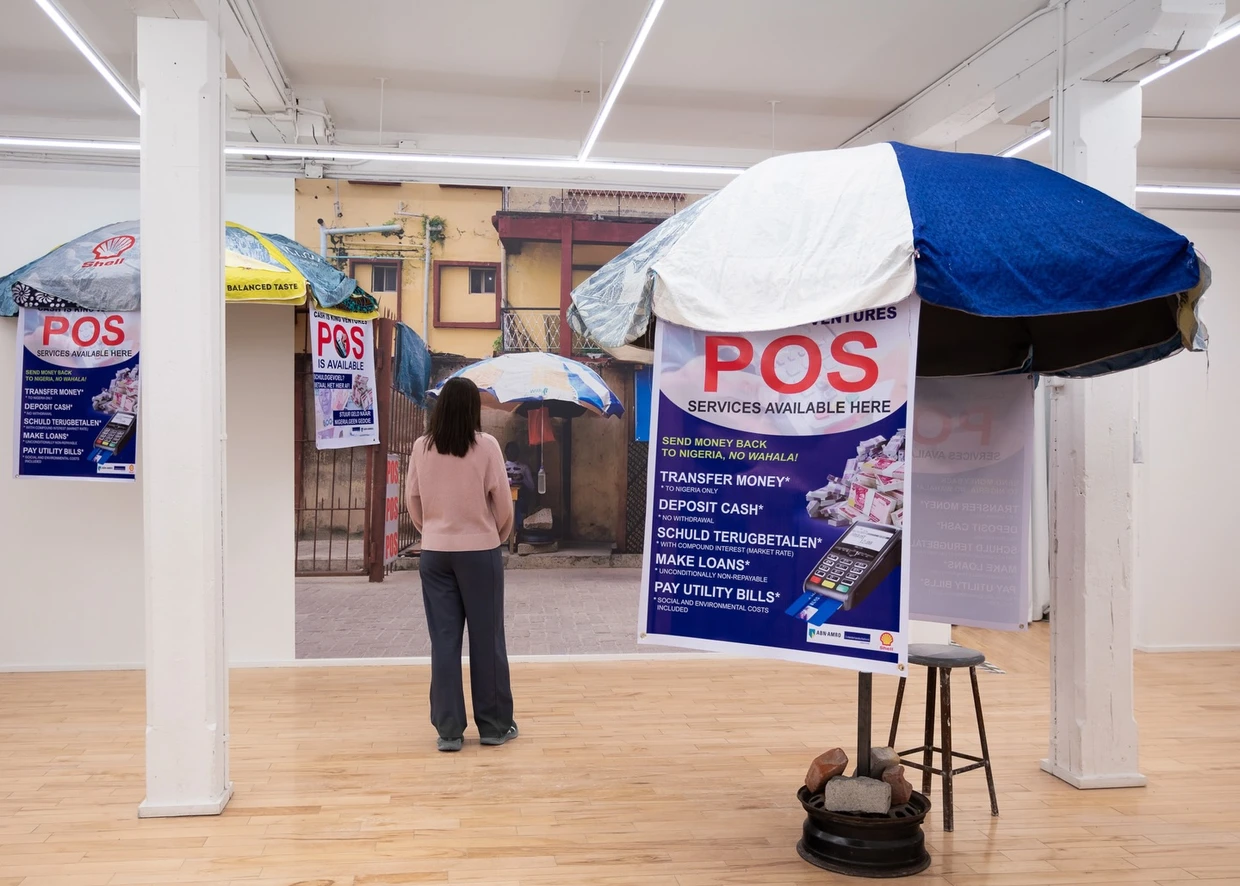
For anyone familiar with Lagos, a roadside POS stand is an ordinary sight. Often set up beneath an umbrella or inside a small kiosk, these businesses provide access to cash withdrawals, transfers, deposits, and other financial services. Their appearance is equally familiar: brightly coloured fabrics, overlapping advertisements, company logos, handwritten signs, and the unmistakable announcement that POS services are available. In POS Available Here (2025), Nigerian-Canadian conceptual artist Kosisochukwu Nnebe takes this familiar piece of Lagos's financial landscape and reimagines it as an installation concerned with colonial history, economic exploitation, and reparations.
The project began with a personal observation. Returning to Nigeria after 25 years, Nnebe quickly became accustomed to the busy streets of Lagos but found herself particularly curious about the numerous signs advertising POS services. Their visibility raised questions about the economic conditions that made these informal banking businesses so important. Rather than approaching them simply as symbols of Nigeria's financial system, she became interested in the people operating them, the ingenuity behind their businesses, and the wider economic relationships that shape their daily experiences. To develop the project, Nnebe interviewed women working as POS agents in Lagos. Their experiences helped her understand the everyday realities of operating within Nigeria's economy, where people frequently develop their own solutions to problems of financial access, employment, and infrastructure.
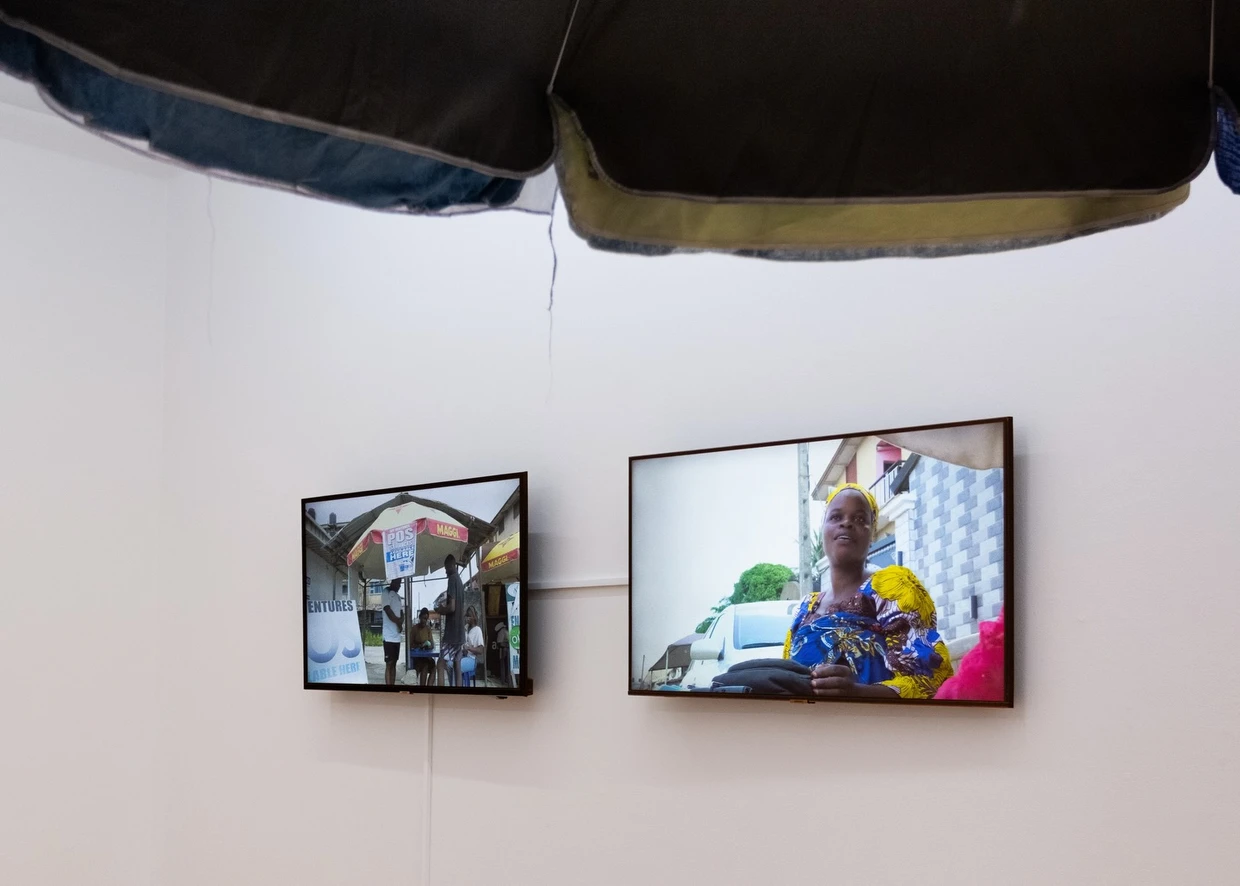
These conversations became an important part of the installation, grounding its broader political and economic questions in the experiences of women whose labour sustains an important part of everyday financial activity. Visually, POS Available Here draws directly from the makeshift architecture and graphic language of roadside POS stands. Nnebe recreates their layered appearance through mismatched fabrics, promotional banners, printed advertisements, and company logos. The materials are arranged into sculptural structures that retain something of the improvisation associated with the original stands. The visual decisions are important to the work's argument. The advertising materials and fabrics that might initially appear incidental become evidence of the economic relationships Nnebe wants viewers to consider.
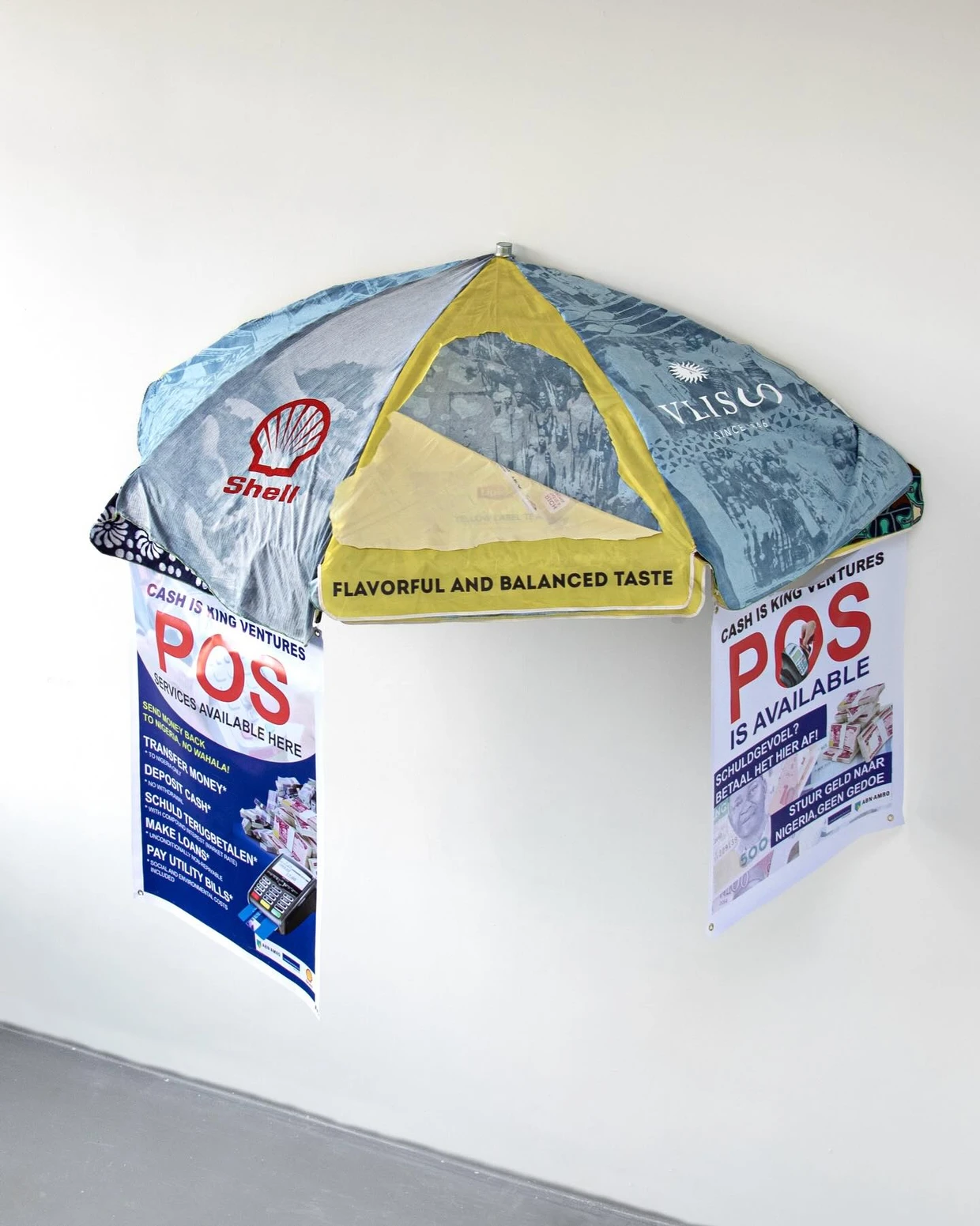
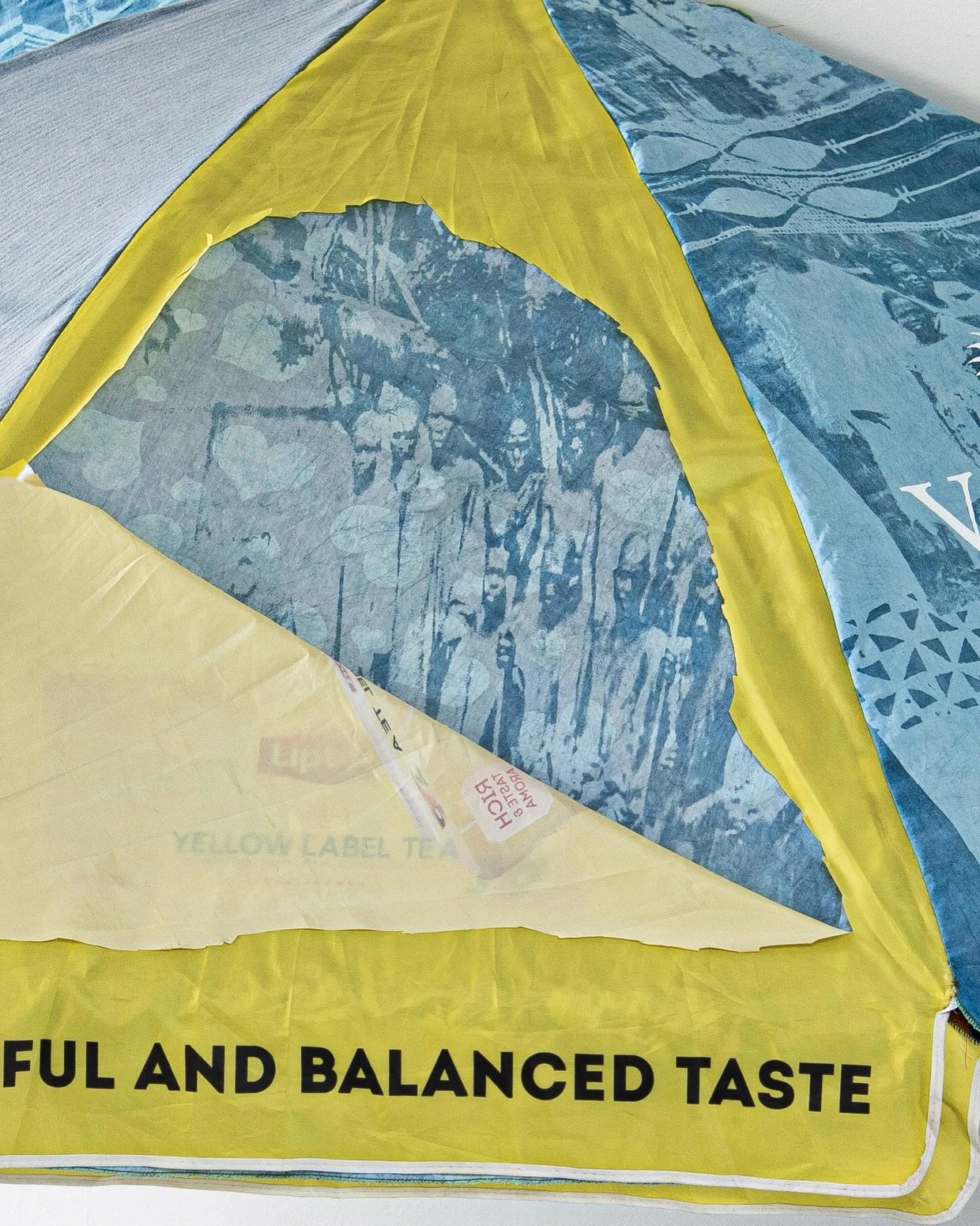
On the streets of Lagos, the logos of multinational brands appear everywhere, including on umbrellas and promotional materials used by small businesses. Companies such as Maggi, Coca-Cola, and Milo have become part of this everyday commercial landscape. Nnebe uses their presence to examine the relationship between Nigeria and the multinational corporations that have operated within its economy. One of the companies she considers is Shell, the Dutch multinational whose oil extraction activities in the Niger Delta have been associated with longstanding environmental damage and disputes over corporate accountability. She also investigates the historical connections between the Royal Niger Company, British colonial expansion, and later corporate ownership. In one textile element of the installation, a fabric bearing the Lipton logo conceals an archival image associated with the sale of the Royal Niger Company's charter to the British government. Nnebe draws attention to the corporate histories connecting these institutions, including the company's eventual absorption into what became Unilever.
This double meaning becomes particularly important when considering the historical responsibility of European financial institutions. Instead of reproducing the logos of Nigerian telecommunications companies commonly seen on POS advertisements, she introduces those of Dutch banks that have acknowledged their historical involvement in slavery without offering the financial compensation she calls for.
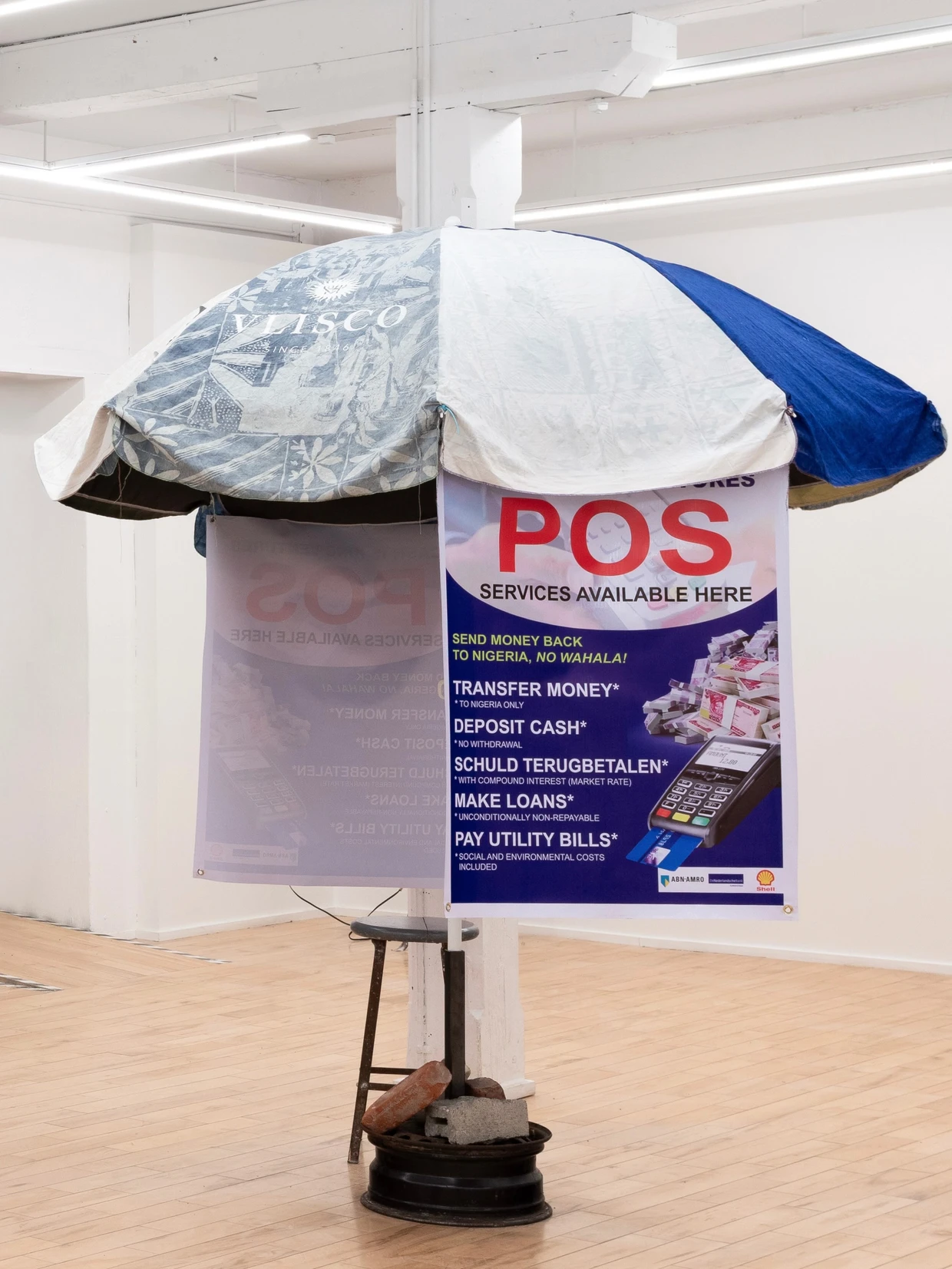
The installation consequently asks viewers to consider debt in more than its conventional financial sense. It raises questions about who owes whom, how wealth has historically been accumulated, and what meaningful forms of restitution might look like. As part of the project, she assumes the role of a POS agent, operating a payment terminal and inviting visitors to contribute money. Rather than receiving banking services in exchange, participants make payments that are redirected to the women POS agents she interviewed and to local organisations in Lagos.