

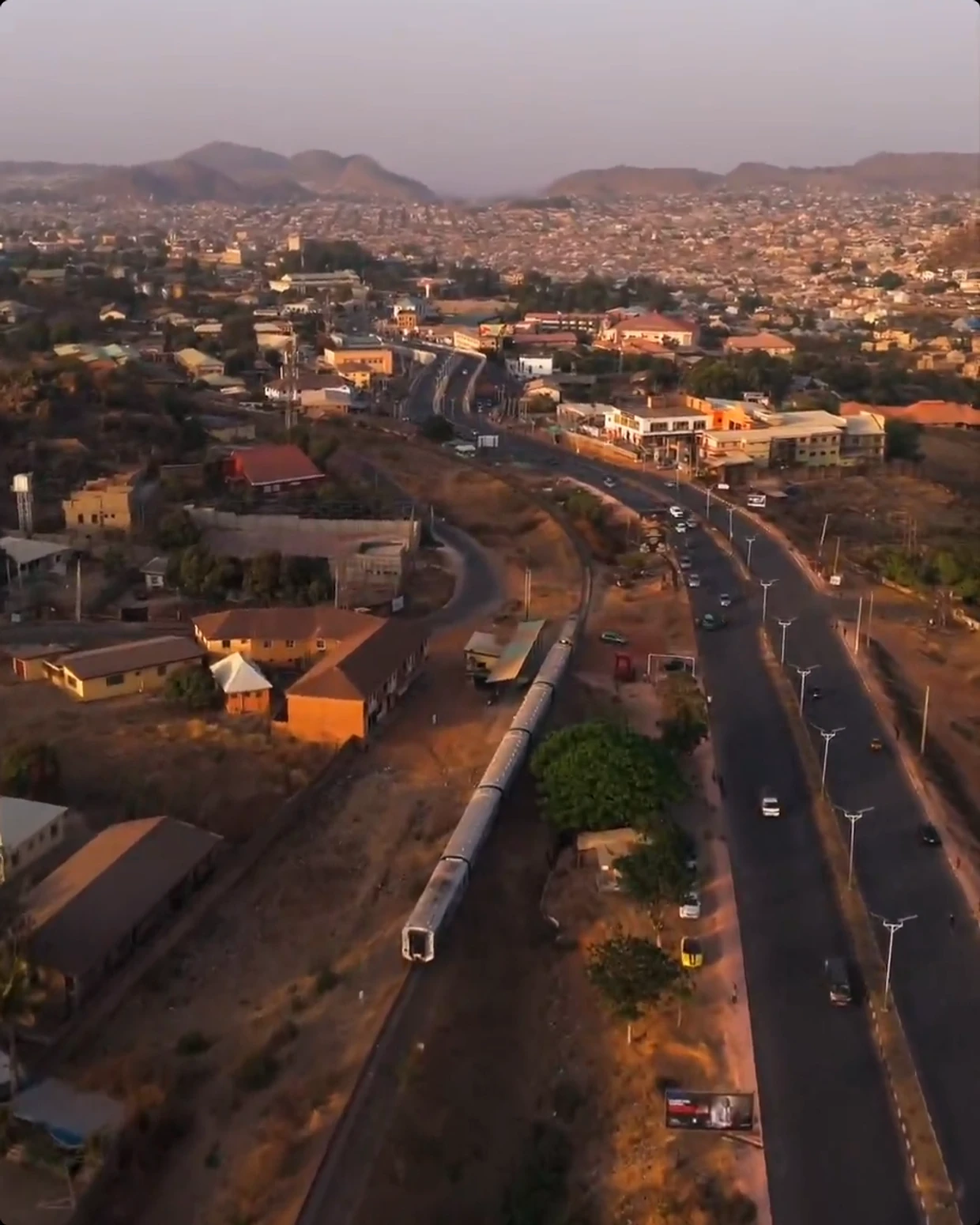
A train winds through the rocky landscape of Jos, headlights trace glowing lines across Abuja at night, and the hills of Plateau State stretch into the distance. Behind these images is George-Isaac Dadzie, a cinematographer, documentary filmmaker, and drone pilot known as Airforce George. For George, filmmaking is as much about the experiences that lead to a shot as the finished footage. His travels, experiments, and occasional spontaneous flights have become opportunities to explore places he finds interesting and share what he discovers. Working across Nigeria and neighbouring West African countries, he has developed a practice that combines personal curiosity with professional assignments through Epitome Legacy.
One of George's most interesting projects involved following a moving train near Jos. He recalls pursuing it with his drone for approximately two kilometres, keeping the train in frame as it travelled through the surrounding landscape. The sequence demonstrates the importance of timing, positioning, and controlled movement in aerial filmmaking. These considerations are equally apparent in his recordings of Shere Hills and the wider Plateau landscape, where rocky formations, waterfalls, winding roads, and mountains become the subjects of sweeping aerial compositions. By changing the camera's position and distance, George reveals details about the terrain that are difficult to appreciate from the ground.
His experiments with light offer another perspective on familiar environments. In Abuja, George has produced nighttime hyperlapses that capture the movement of vehicles and the changing patterns of illumination across the city. Using long exposures and carefully planned drone movements, he transforms roads and headlights into streams of light. He is also particular about how these images are presented. In one post, he asks viewers to rotate their phones, explaining that he deliberately filmed in a 16:9 aspect ratio to preserve the full width of the cityscape. The same attention to composition appears in his golden-hour footage of Lagos Island, where changing sunlight reveals the relationship between buildings, roads, and waterways.
Beyond Nigeria, George has documented journeys through Ghana, Togo, and Benin Republic, recording landscapes, cities, and experiences from his travels. His footage also offers insight into the practical realities of drone filmmaking. During his trip to Togo and Benin, he noted that flight restrictions prevented him from capturing several locations, illustrating how regulations and access can shape the outcome of a project. His personal films sit alongside commissioned work through Epitome Legacy, a production studio working across documentary, narrative, and commercial filmmaking. These include promotional coverage of the African International Housing Show and a trailer for WORG NG, an agriculture-focused initiative for which he combined location footage with AI-assisted production techniques.
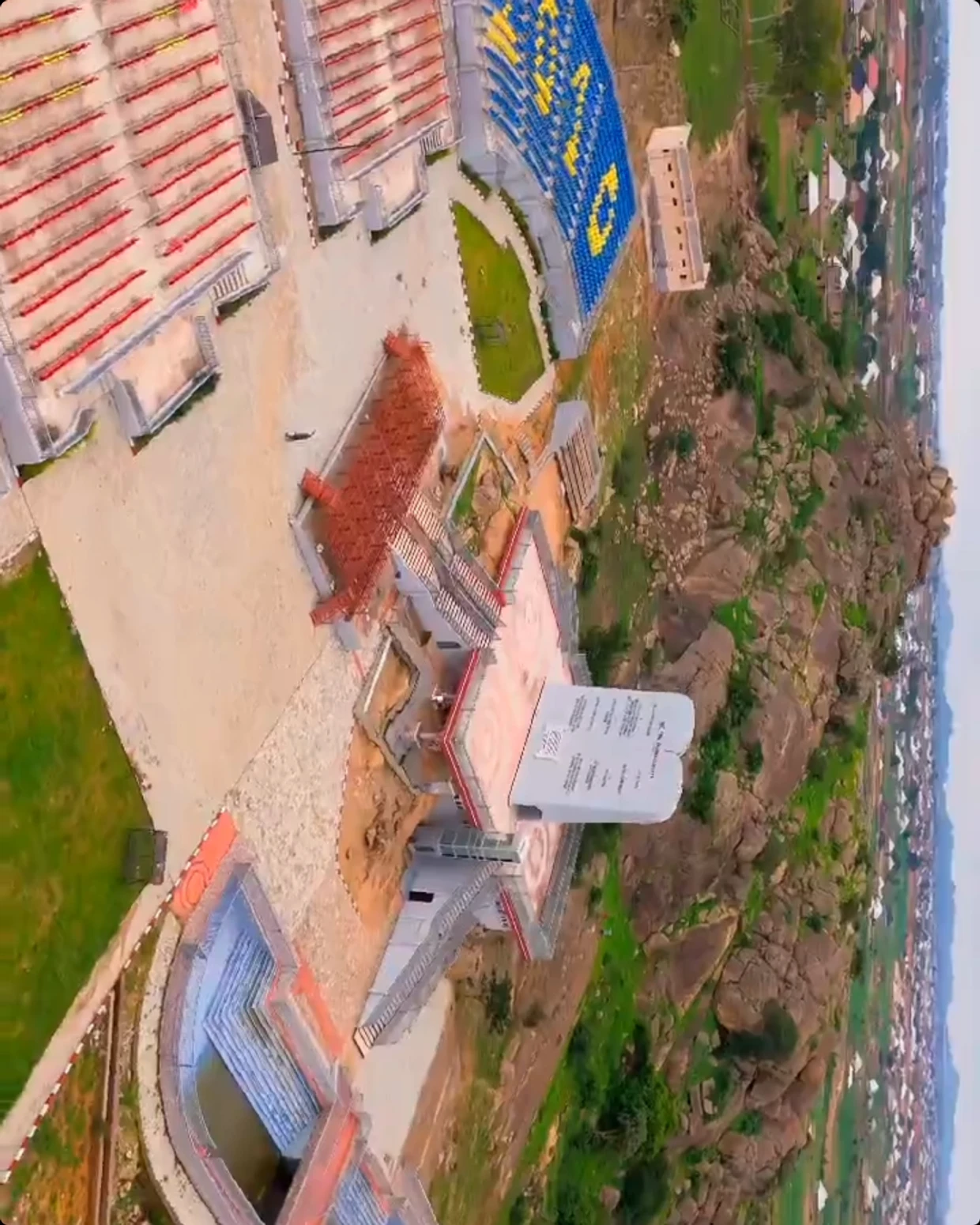
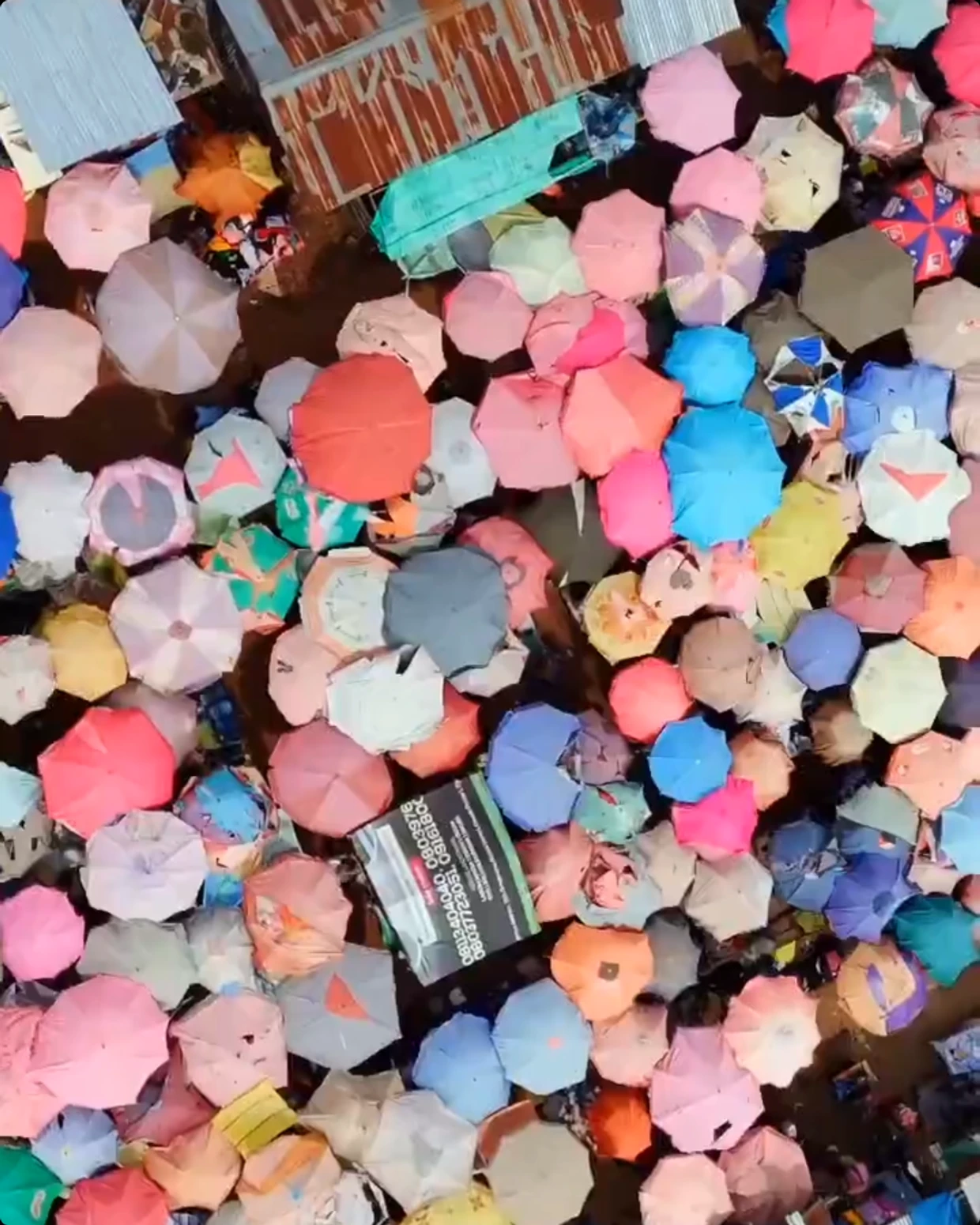
George's documentary work brings his attention from landscapes to the people who inhabit them. In a short film about a bell pepper farmer in Plateau State, he documents the farmer's daily work and ambitions, demonstrating how his filmmaking extends beyond aerial views into personal storytelling. His wider professional experience includes documenting medical outreach programmes, agricultural initiatives, and other community-focused projects. He has also applied drone technology to technical work, including infrastructure inspection and mapping. Although these assignments serve different purposes, they share a dependence on careful planning, precise operation, and an understanding of the environment being recorded. His filmmaking received recognition in 2020 when Dark Stars was selected as an African People's Choice winner in the Musicbed Reopen Challenge.
George’s work is also shaped by a willingness to experiment, whether with long exposures, unusual flight paths, or the relationship between music and moving images. Through his growing collection of films, George-Isaac Dadzie continues to document West African environments and experiences, showing how a change in perspective can reveal something new about places we think we already know.