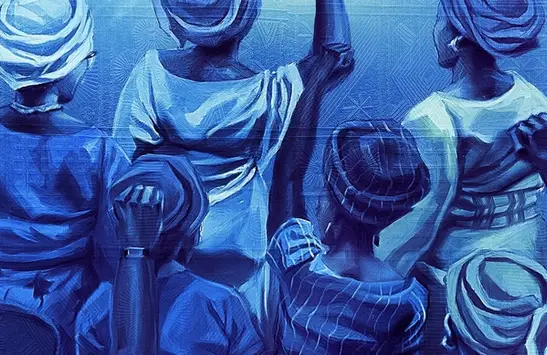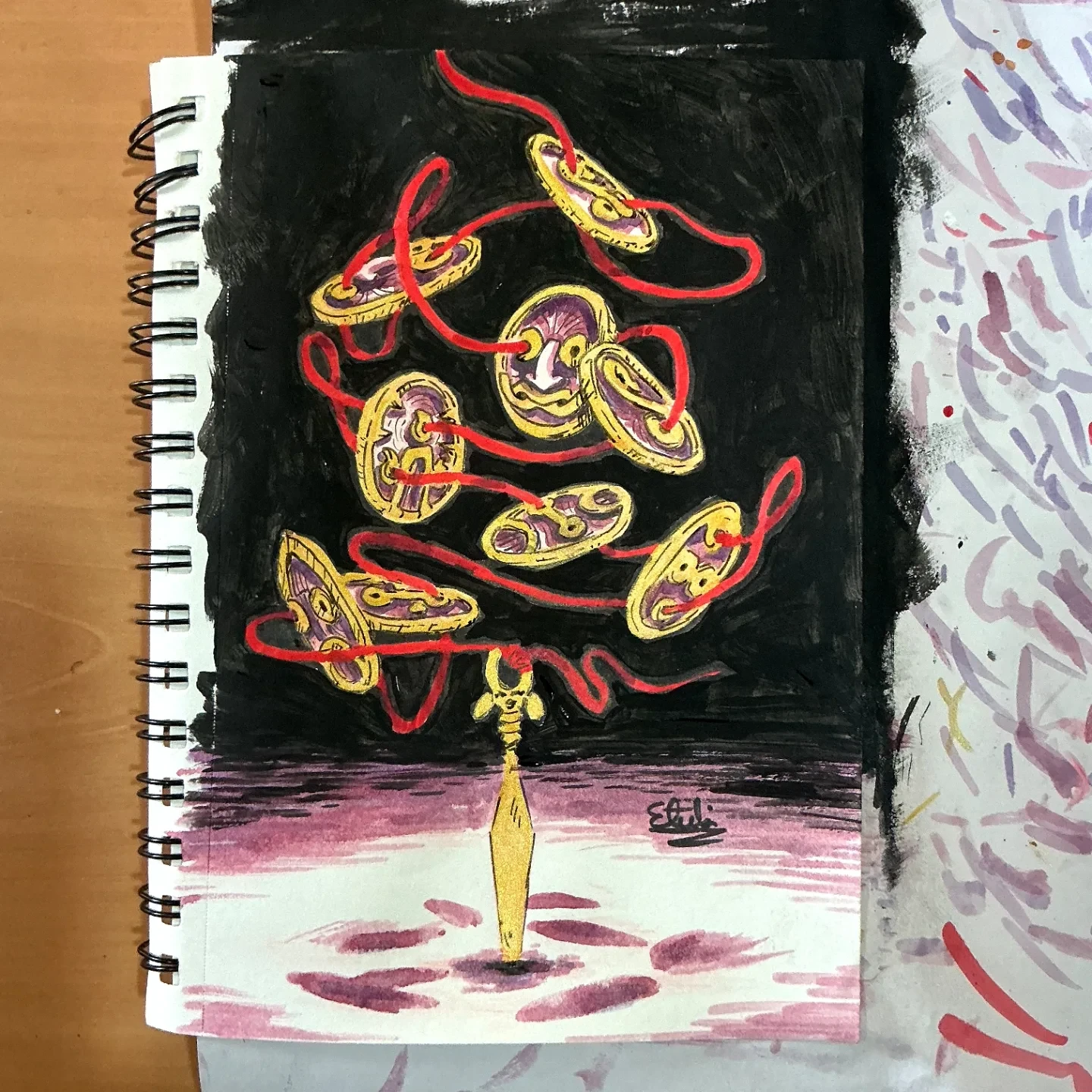


In many Nigerian stories about juju, ordinary objects can possess extraordinary powers. A charm might protect its owner from harm, a ritual object could reveal hidden truths, and a curse might bring terrible consequences to someone who has done wrong. These ideas have long been part of folklore, popular entertainment, and everyday conversations about the supernatural, where the line between belief, fear, and imagination is often explored through storytelling. Nigerian artist Etubi Onucheyo, better known as Mumu Illustrator, draws on this familiar world of charms, rituals, and supernatural consequences in a series of elaborate sketchbook illustrations. His drawings depict fictional artefacts with unusual appearances and even stranger purposes. Each object comes with a name and a short story explaining its powers, how it might be used, and sometimes the consequences of using it.
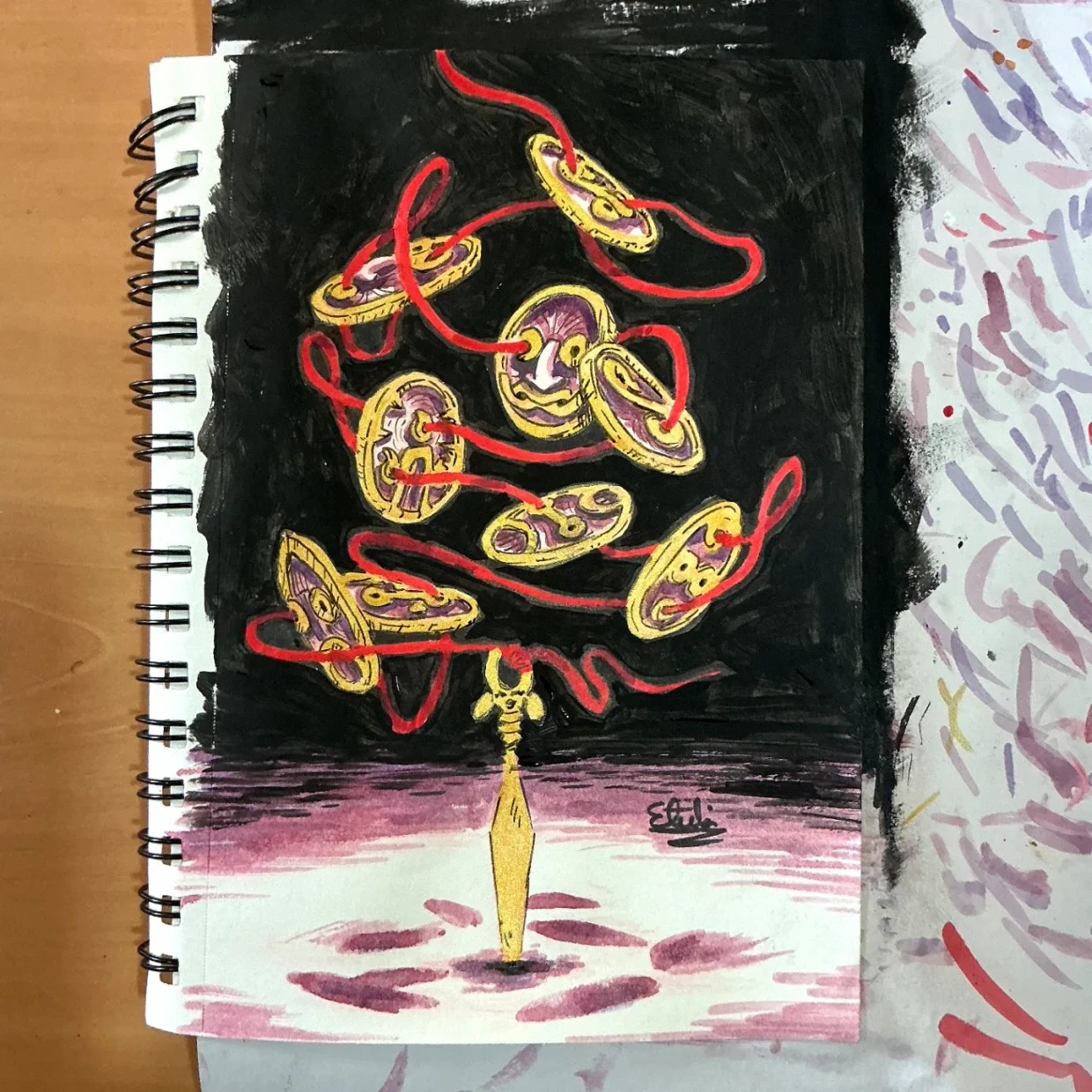
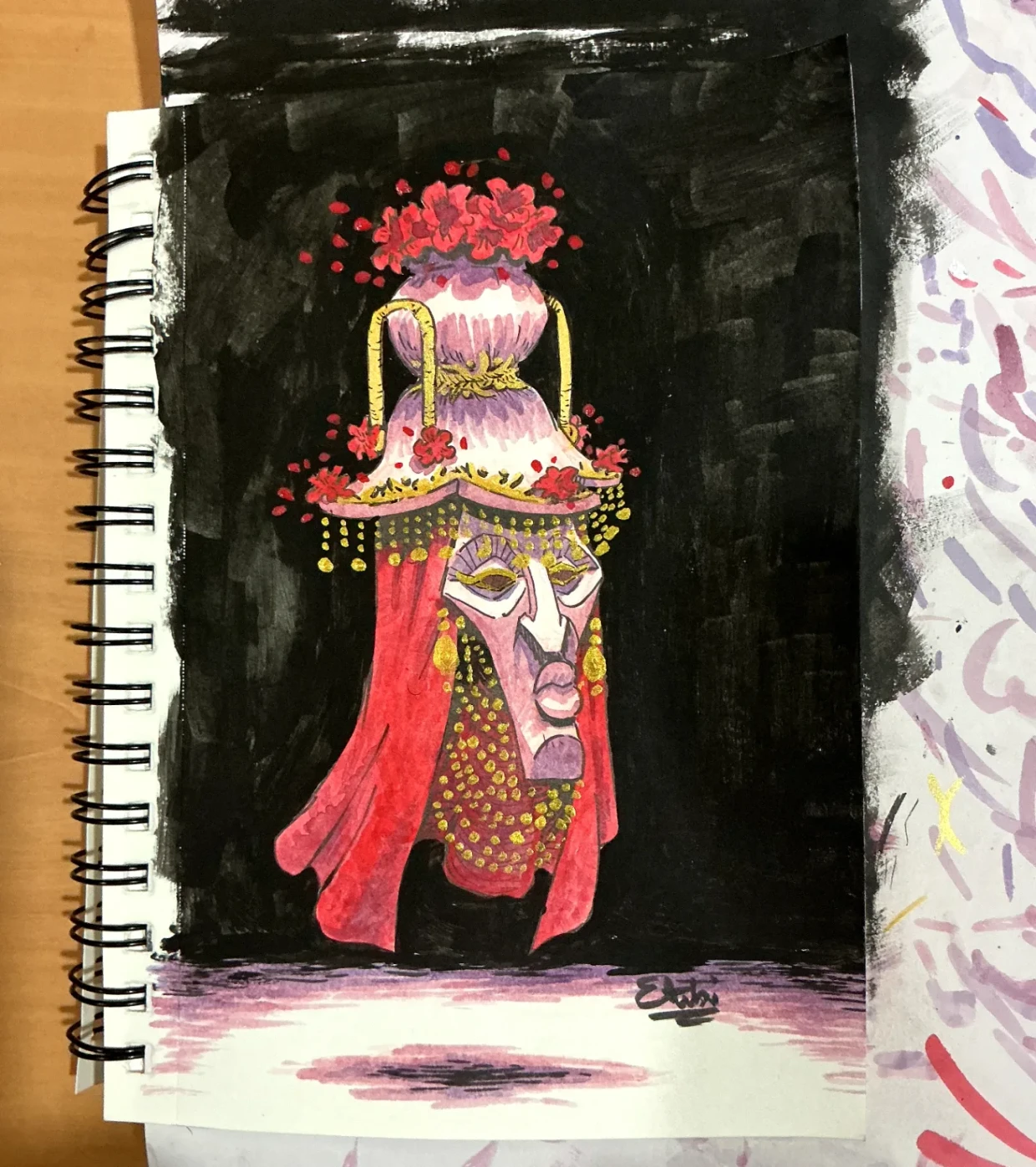
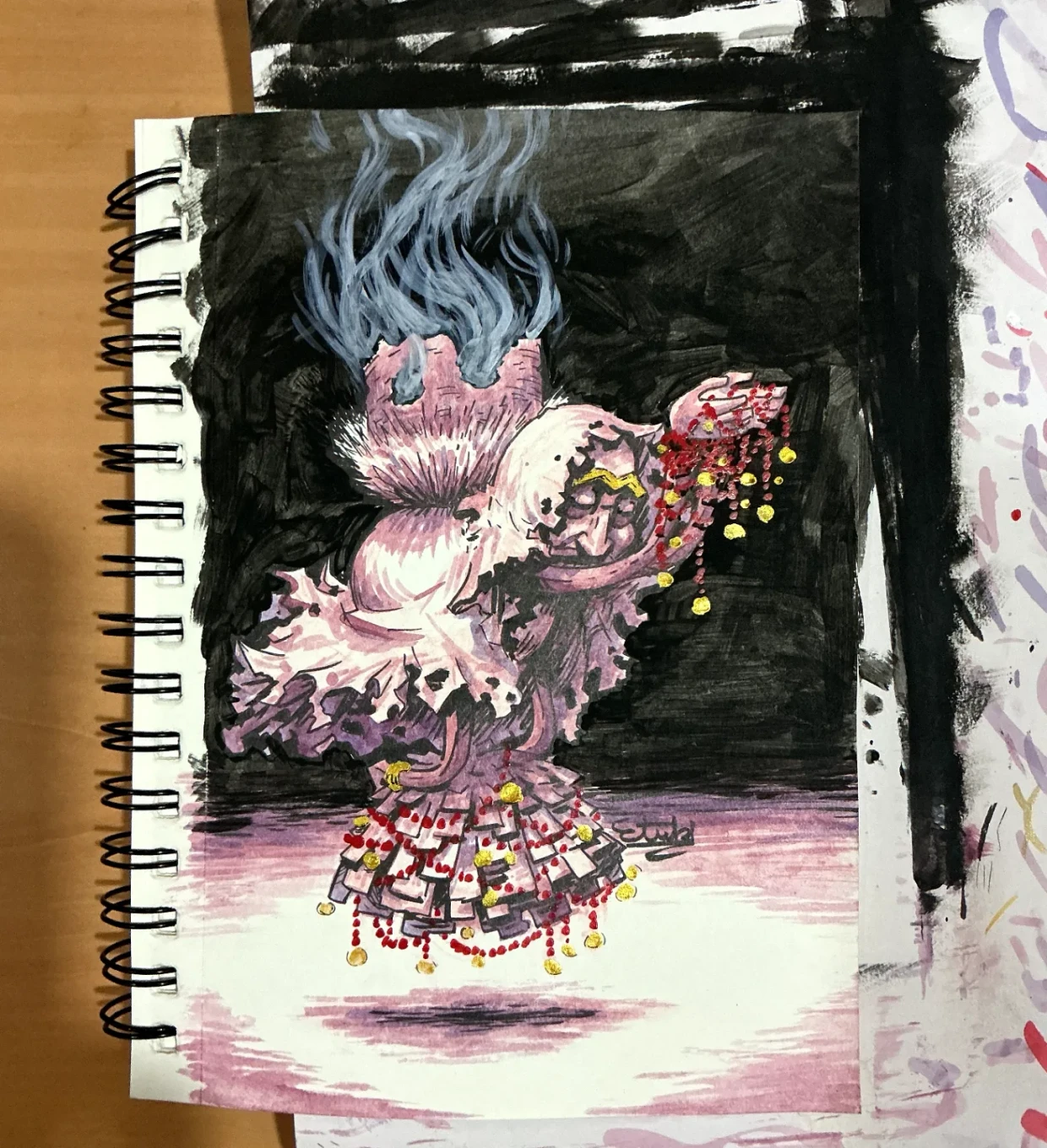
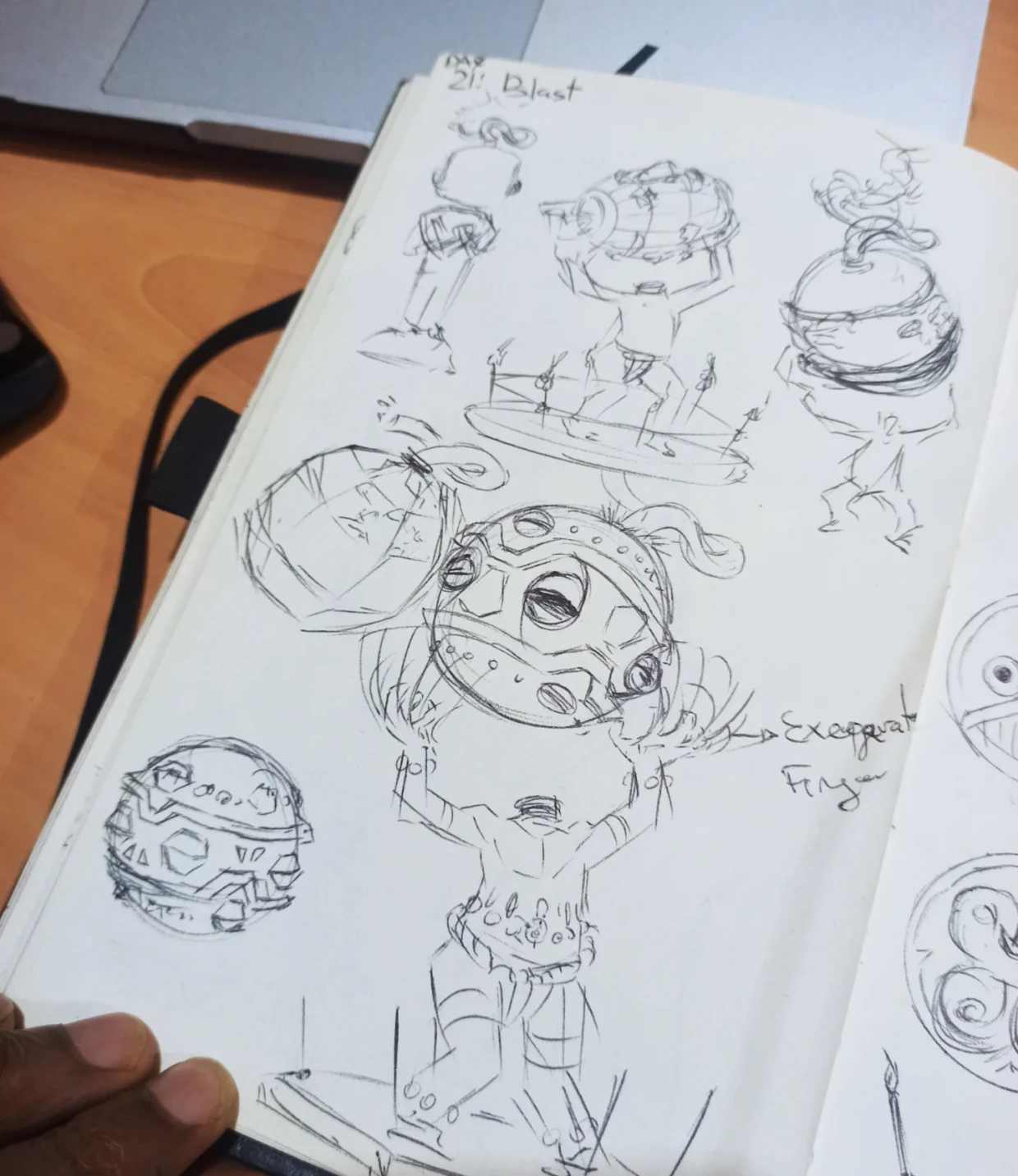
Created as part of his 2025 Inktober series, the drawings began with a familiar exercise: responding to a different prompt each day throughout October. Etubi took the prompts as opportunities to invent objects with their own histories and purposes, developing a collection of fictional artefacts that draw on ritual, folklore, humour, and familiar human experiences.
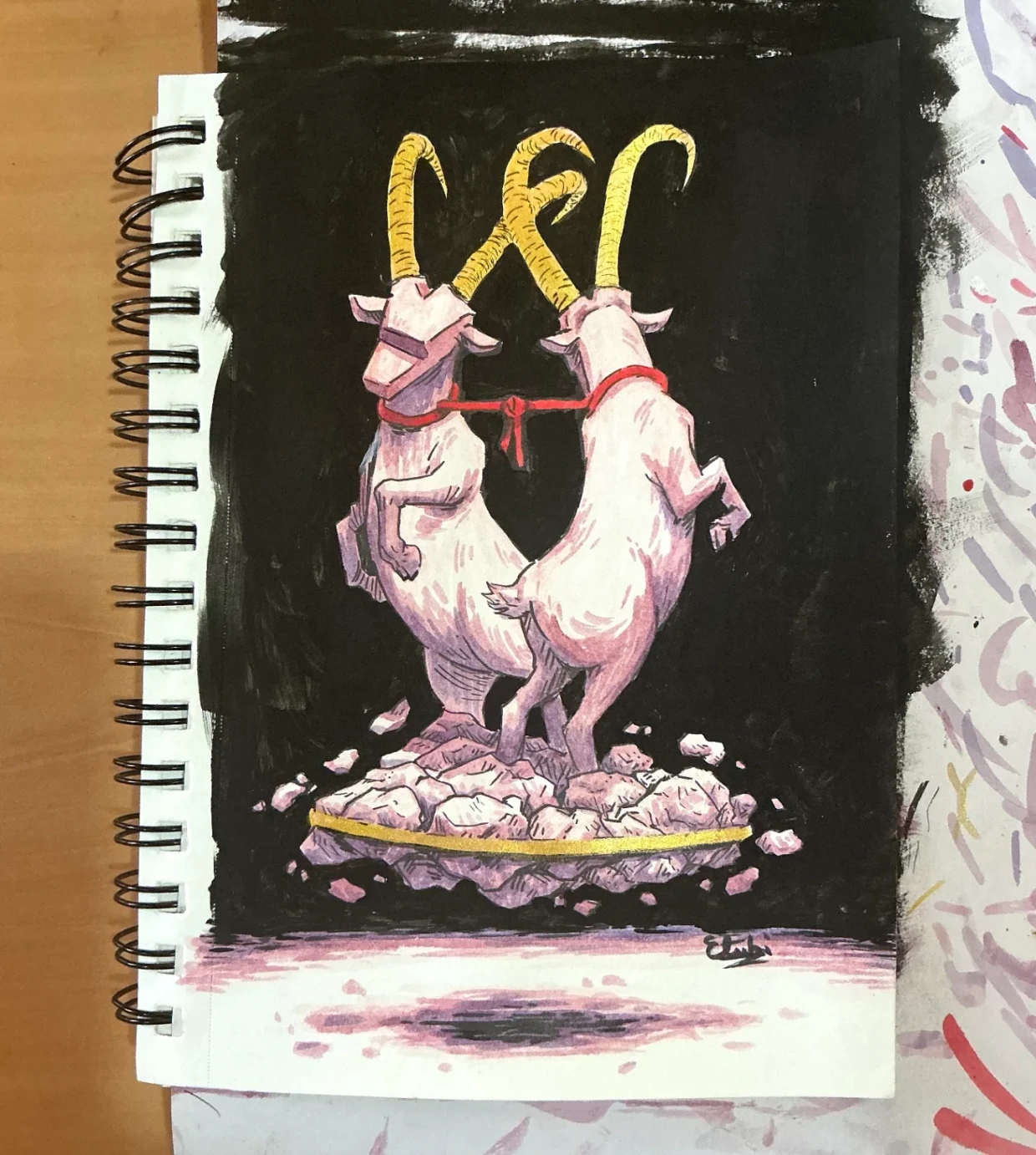
One of the first things that stands out is his use of colour. Etubi works with a palette of dusty pinks, purples, warm yellows, and occasional flashes of red, often placing these colours against large areas of black. The contrast gives his subjects a striking presence, allowing the smallest details to emerge from the darkness. His colours are rarely flat; they overlap and shift in intensity, giving surfaces a worn, textured quality that makes the objects appear as though they have existed for some time.
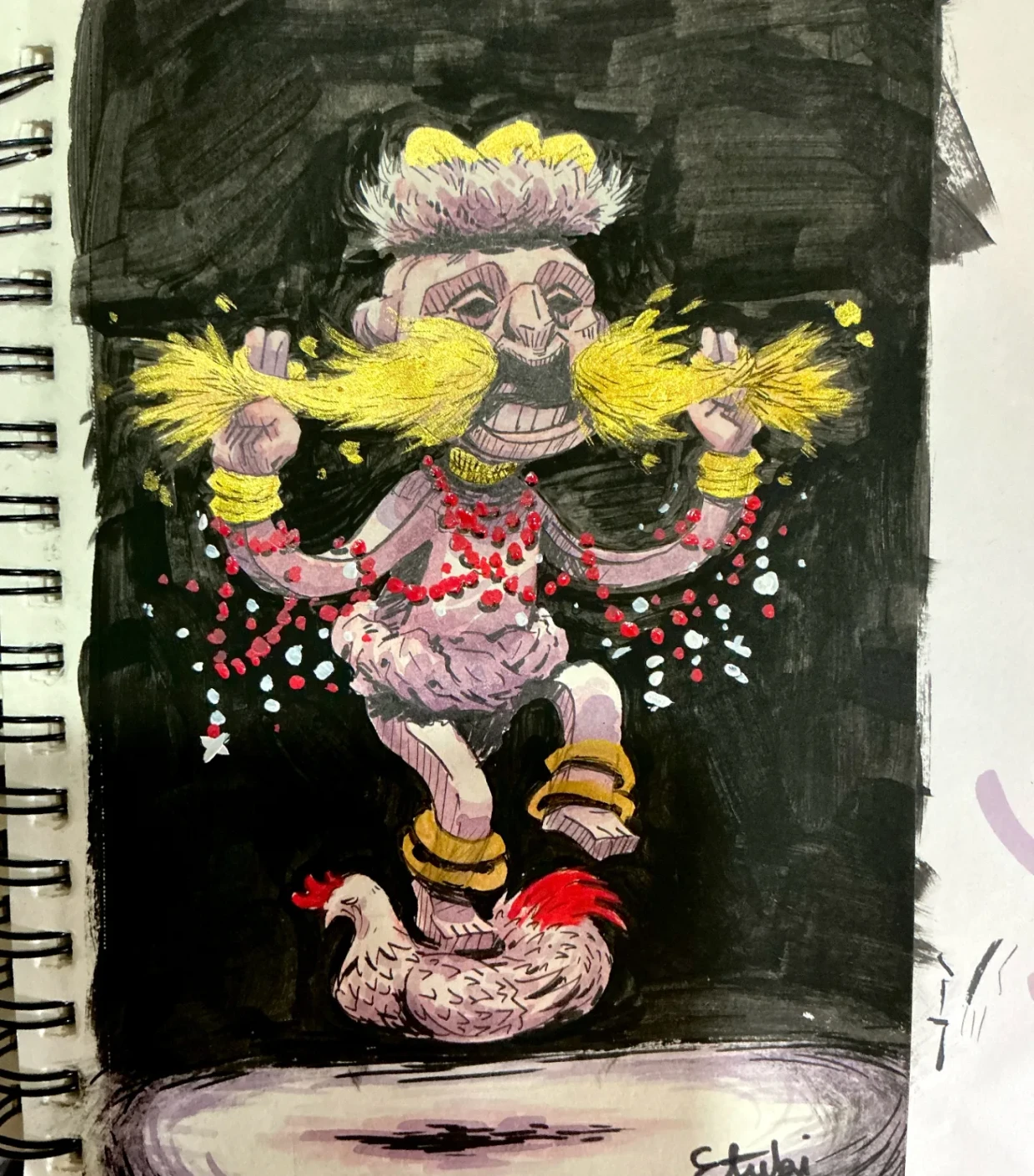
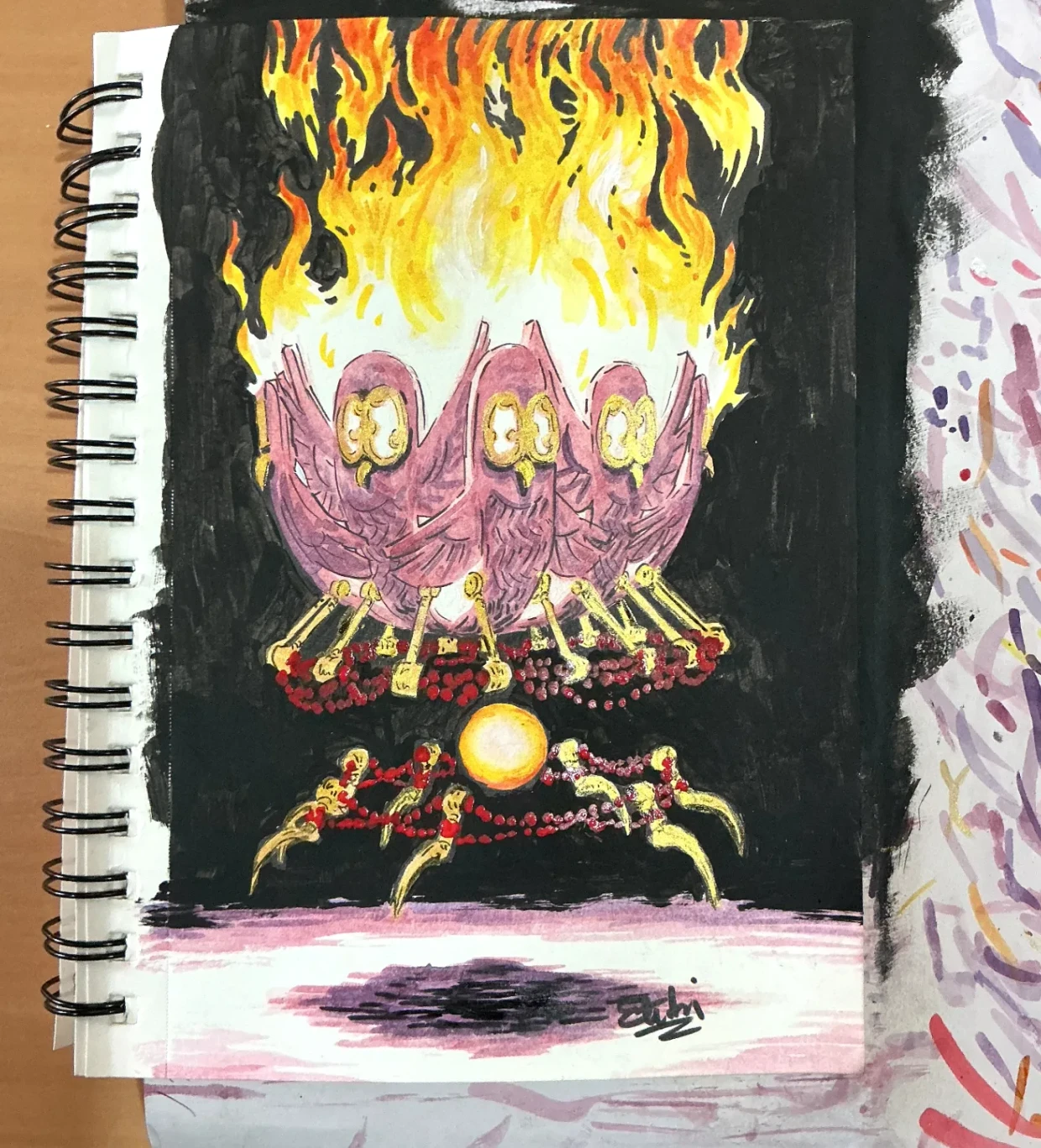
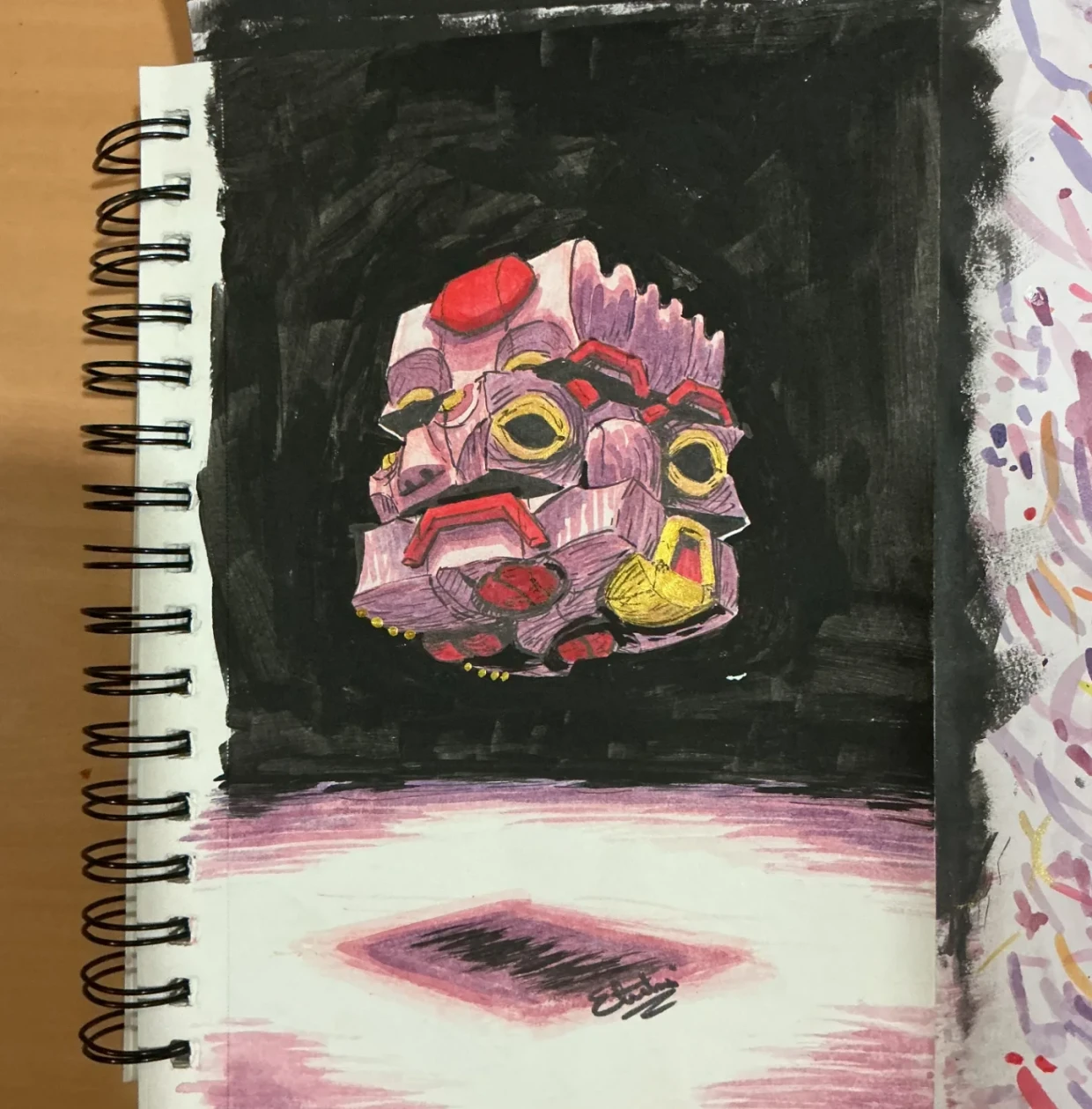
His linework contributes just as much to this impression. Thick outlines establish the shapes of his subjects, while finer, sometimes irregular strokes describe folds, carvings, ornaments, and other surface details. The lines aren't always perfectly controlled, and that's part of their appeal. There is a visible sense of drawing and discovery in the work, with marks that retain the energy of the hand that made them. Together, the colours and lines give these imagined objects a physical presence. They appear carved, assembled, wrapped, or decorated, suggesting materials and methods of construction without needing to explain every detail.
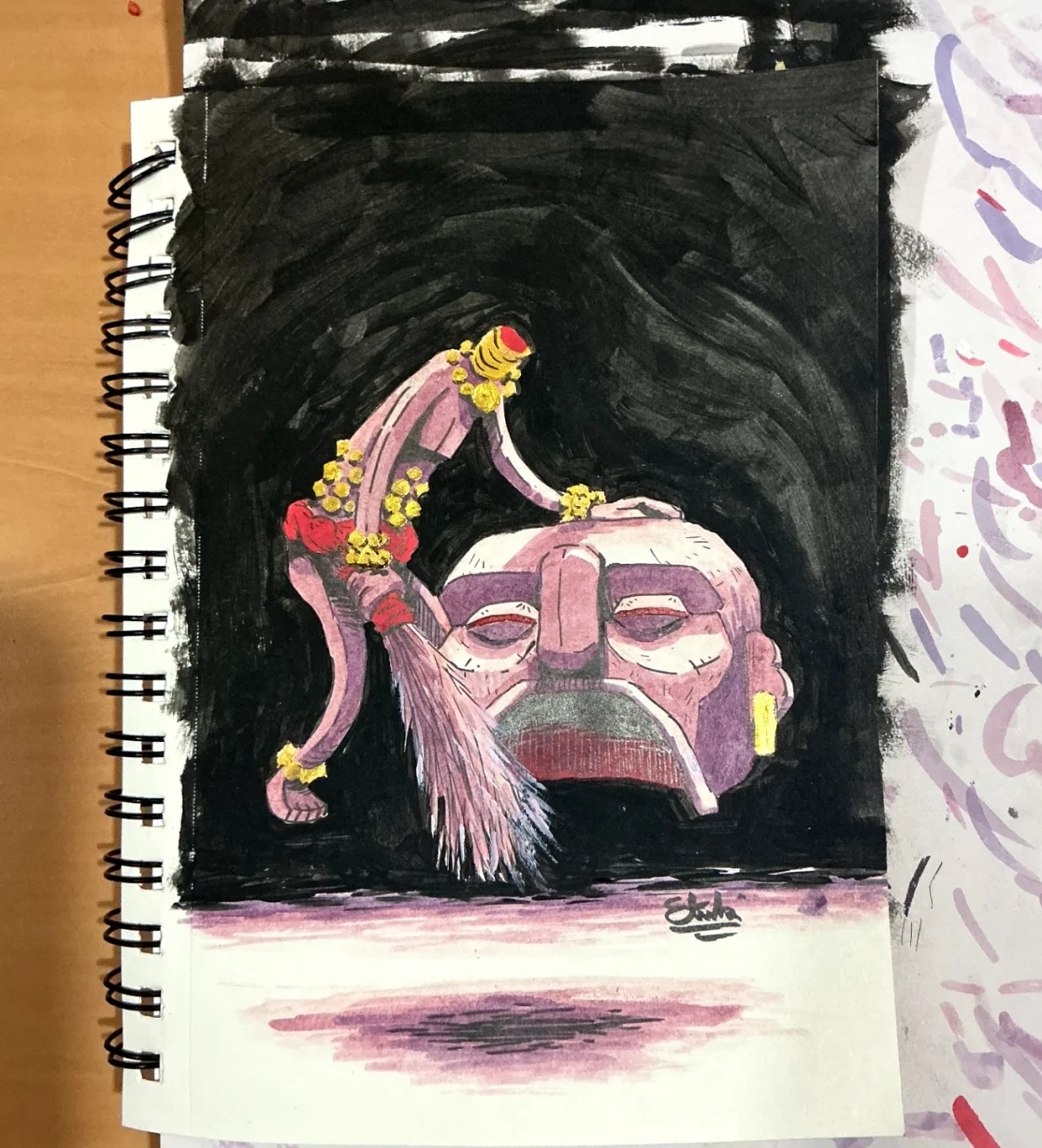
In The Long Shadow of the Father, created for the prompt Lesson, he imagines a charm intended to protect children from unforeseen dangers. The object is presented as something with a practical purpose within its fictional world, but the idea behind it is familiar: a parent's desire to keep their children safe, even from things they cannot anticipate. What might otherwise appear to be an unusual decorative object becomes an expression of care, responsibility, and the limits of protection.
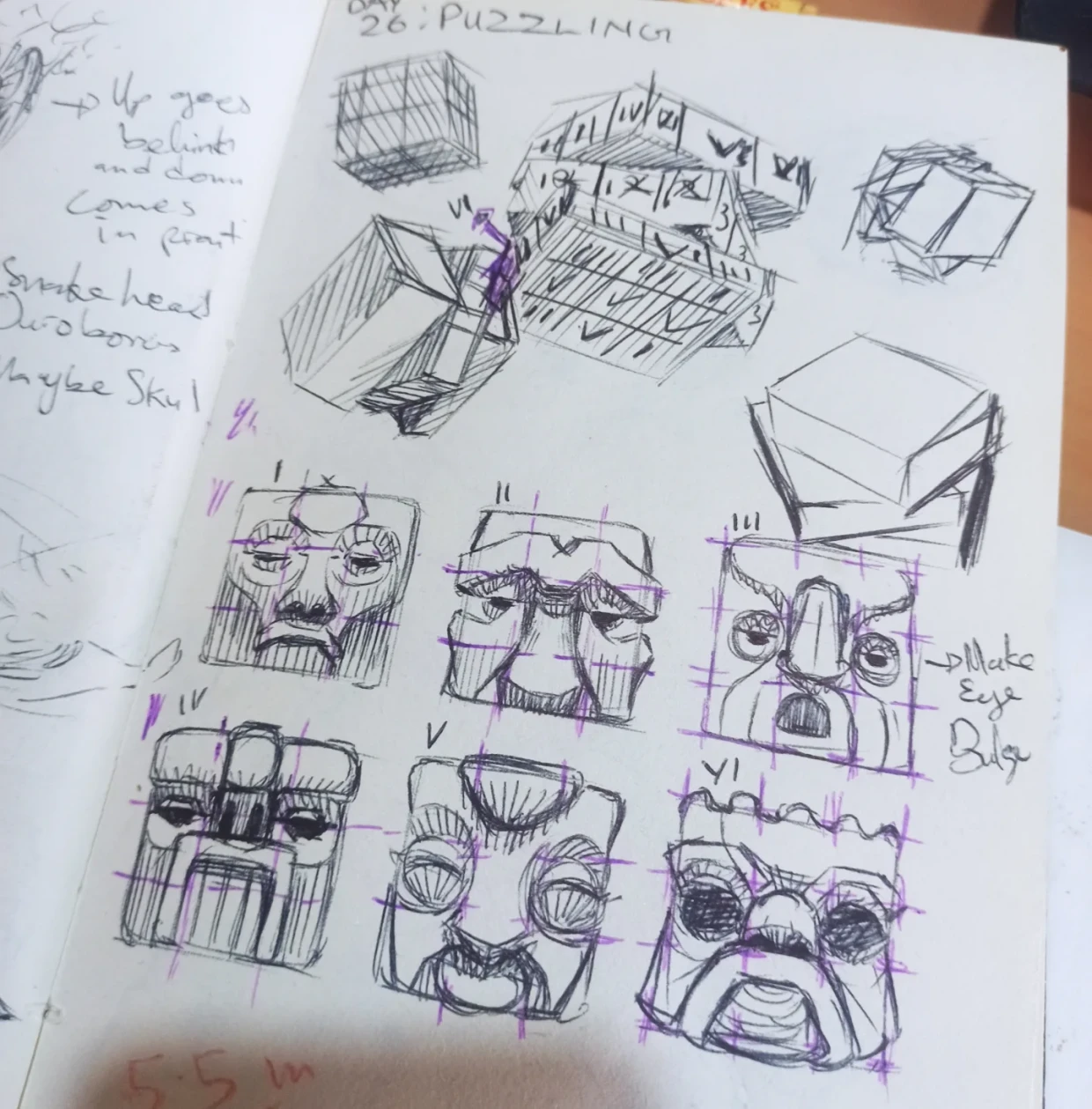
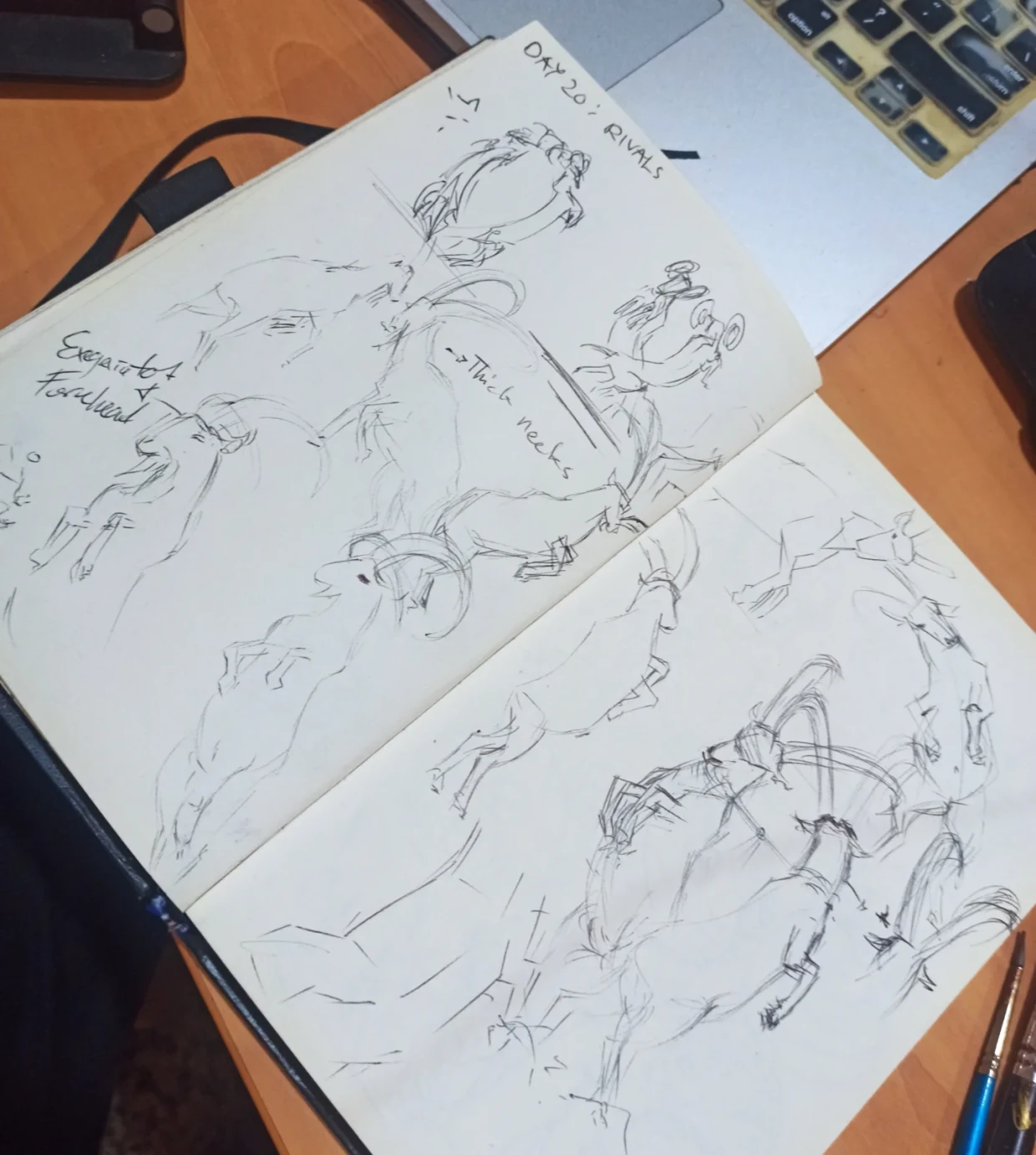
What makes Etubi's work engaging is the attention he gives to both sides of the process. The drawings are enjoyable to look at, with their unusual shapes, rich colours, and dense textures. But the stories make them worth returning to. They encourage viewers to look beyond what an object resembles and consider what it might mean to the people who made, owned, feared, or depended on it.