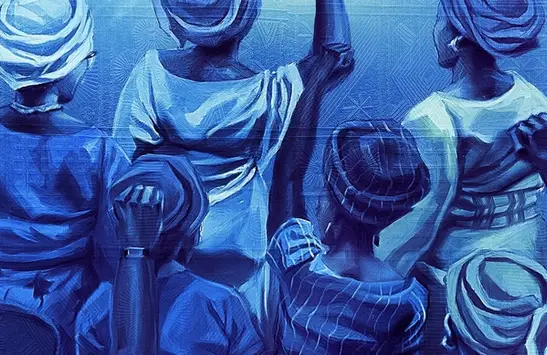


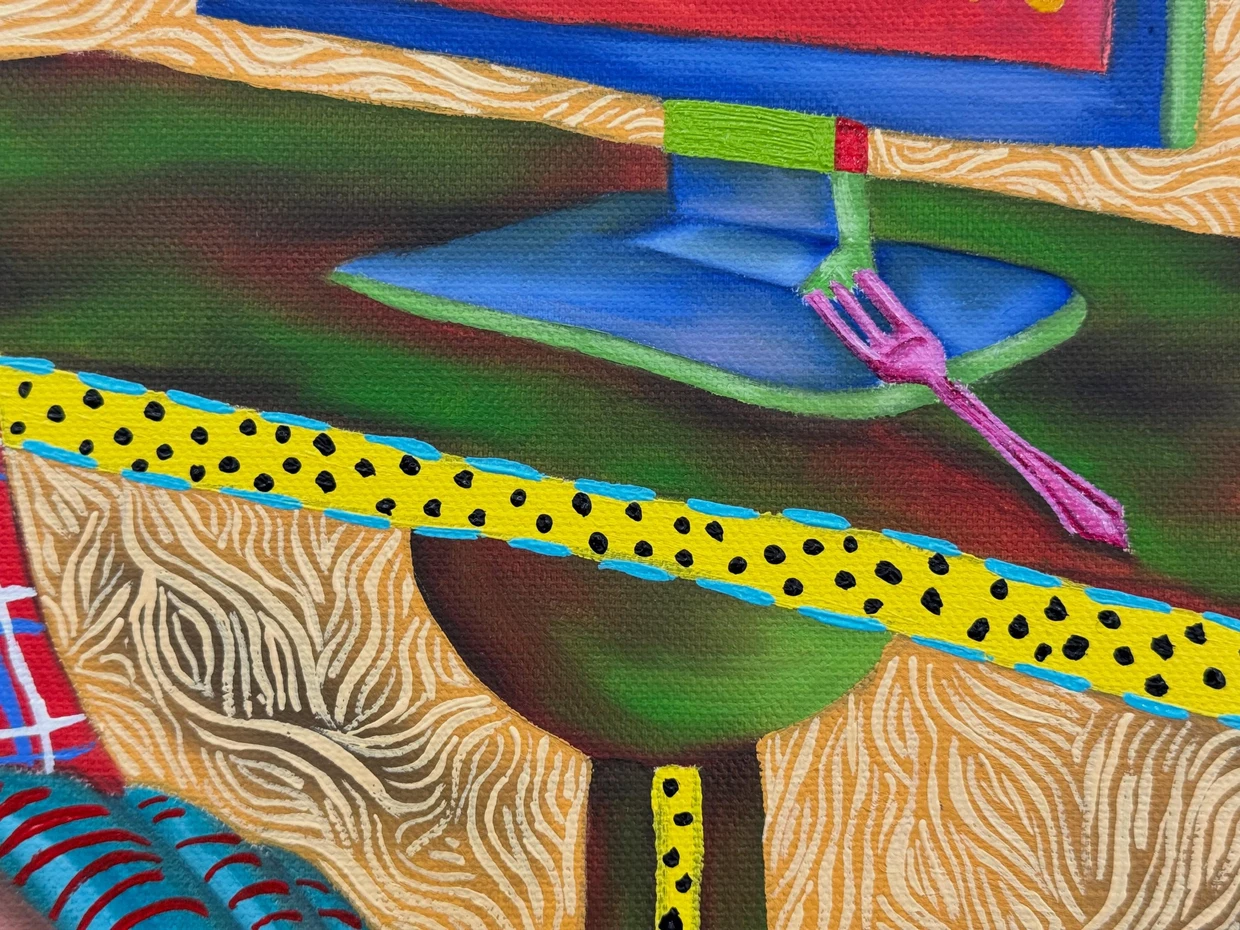
What if time was measured by the crowing of a rooster, the changing seasons, and the rhythm of market days rather than the hands of a clock? This question sits at the centre of When the Cock Crows, a series of four oil paintings by Nigerian artist Chimemelie Okafor. Born in Lagos in 2003 and now based in Toronto, Chimemelie explores her identity and ancestry through paintings filled with colour, patterns, and figures. Her graduation thesis at OCAD University takes a particularly personal direction, examining traditional Igbo understandings of time and how colonialism disrupted them. Although she grew up in Nigeria and identifies as Igbo, Chimemelie explains that she was never taught this knowledge system. English was her first language, and her formal education largely prioritised European ideas. The project emerged from her desire to understand a part of her heritage that had been absent from her upbringing.
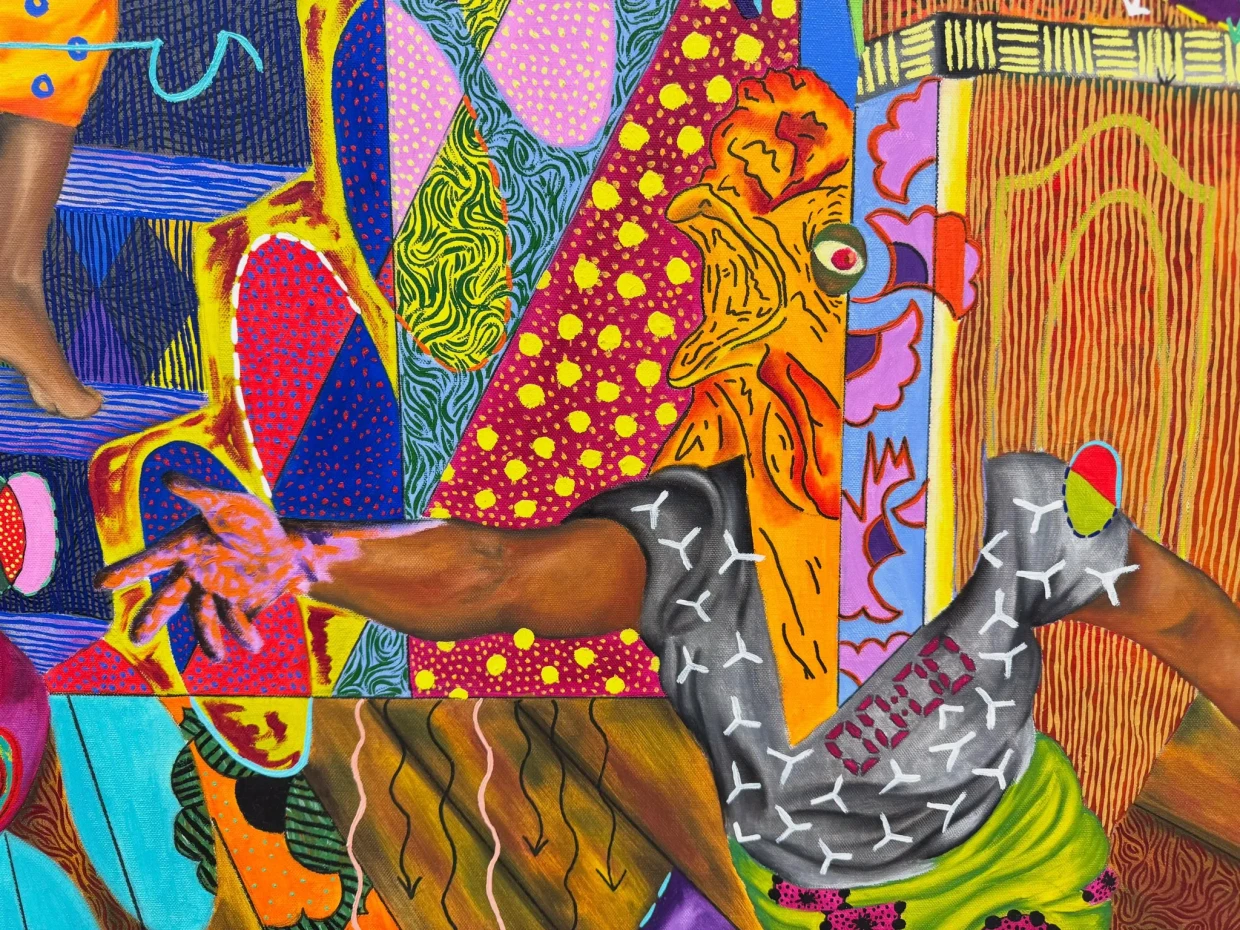
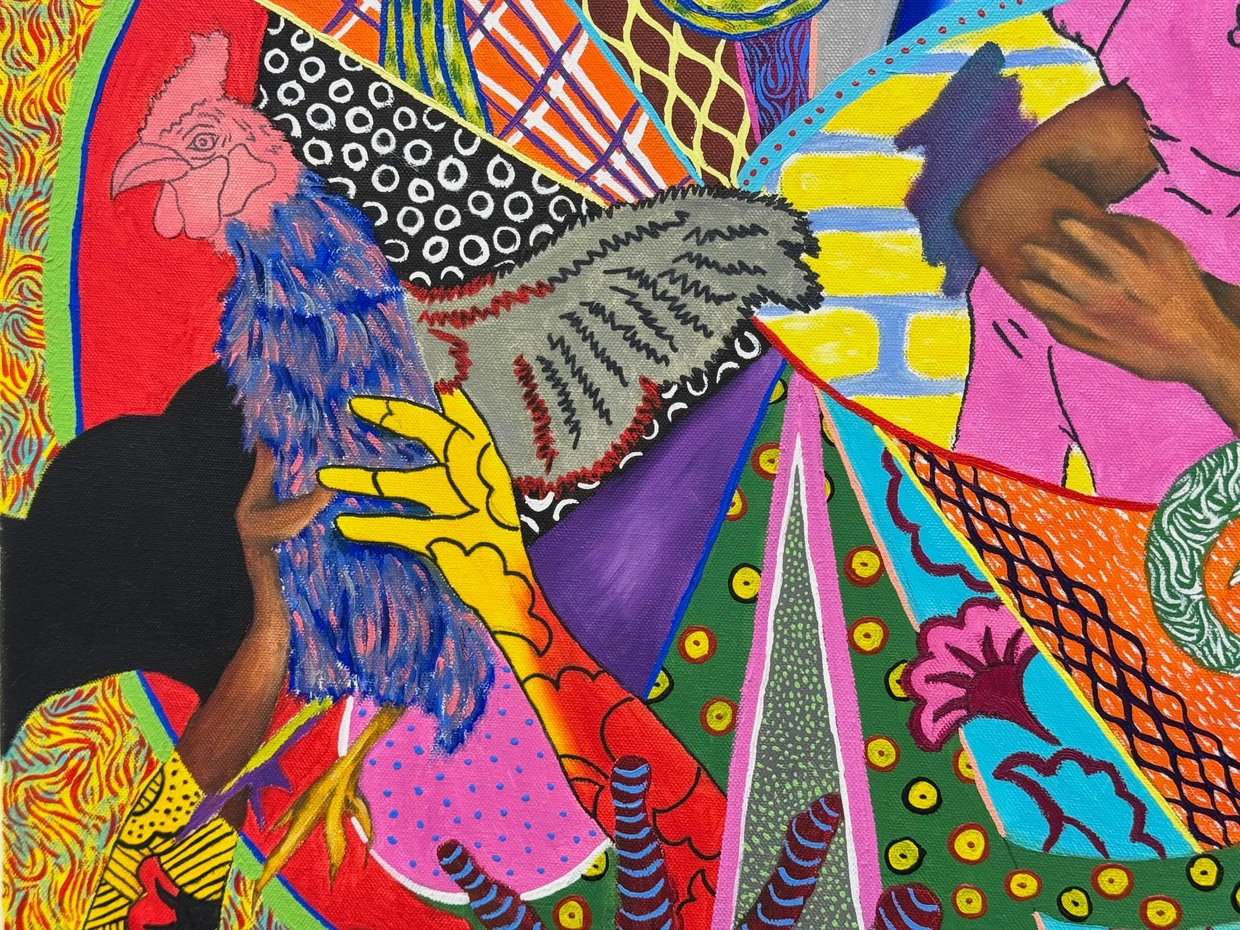
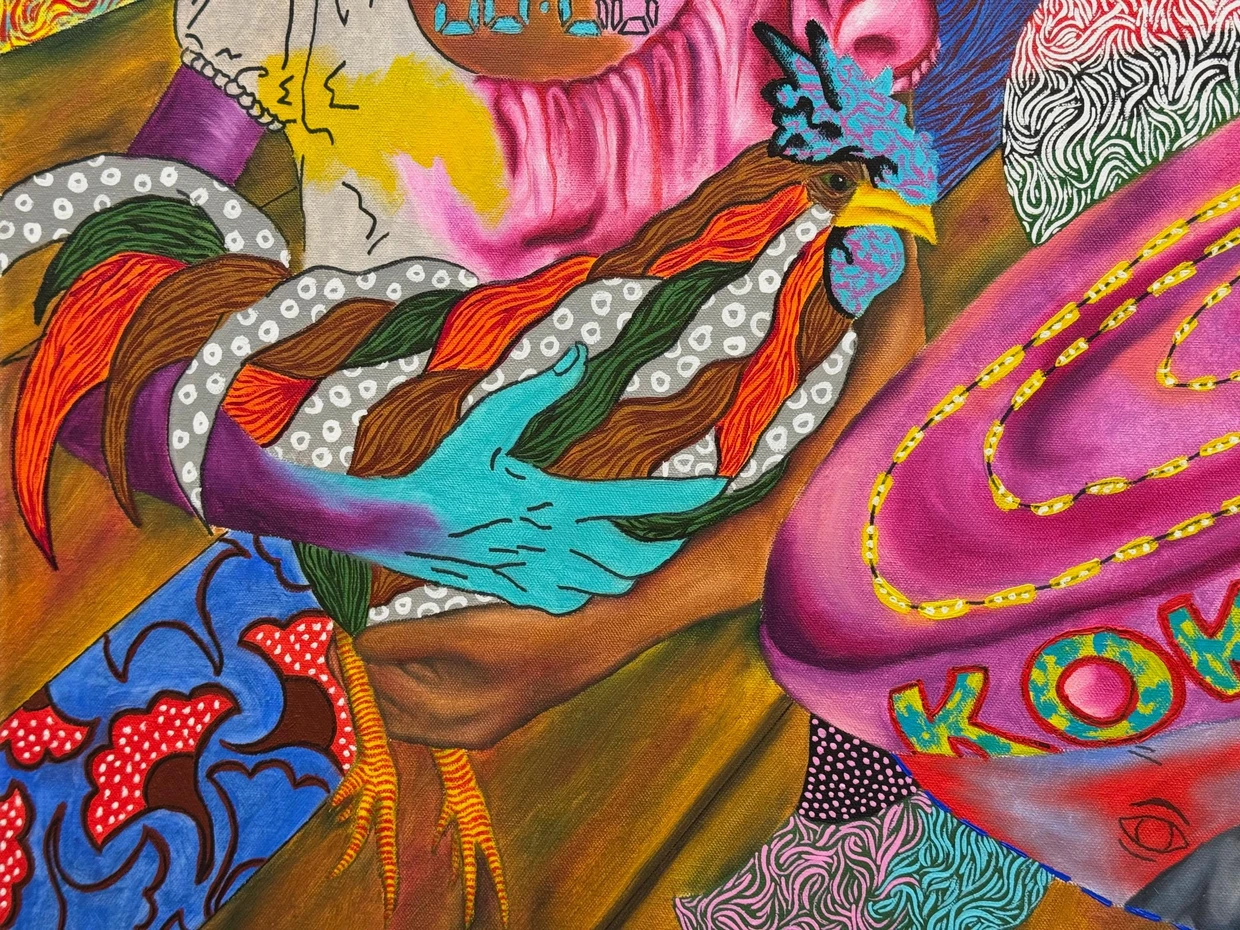
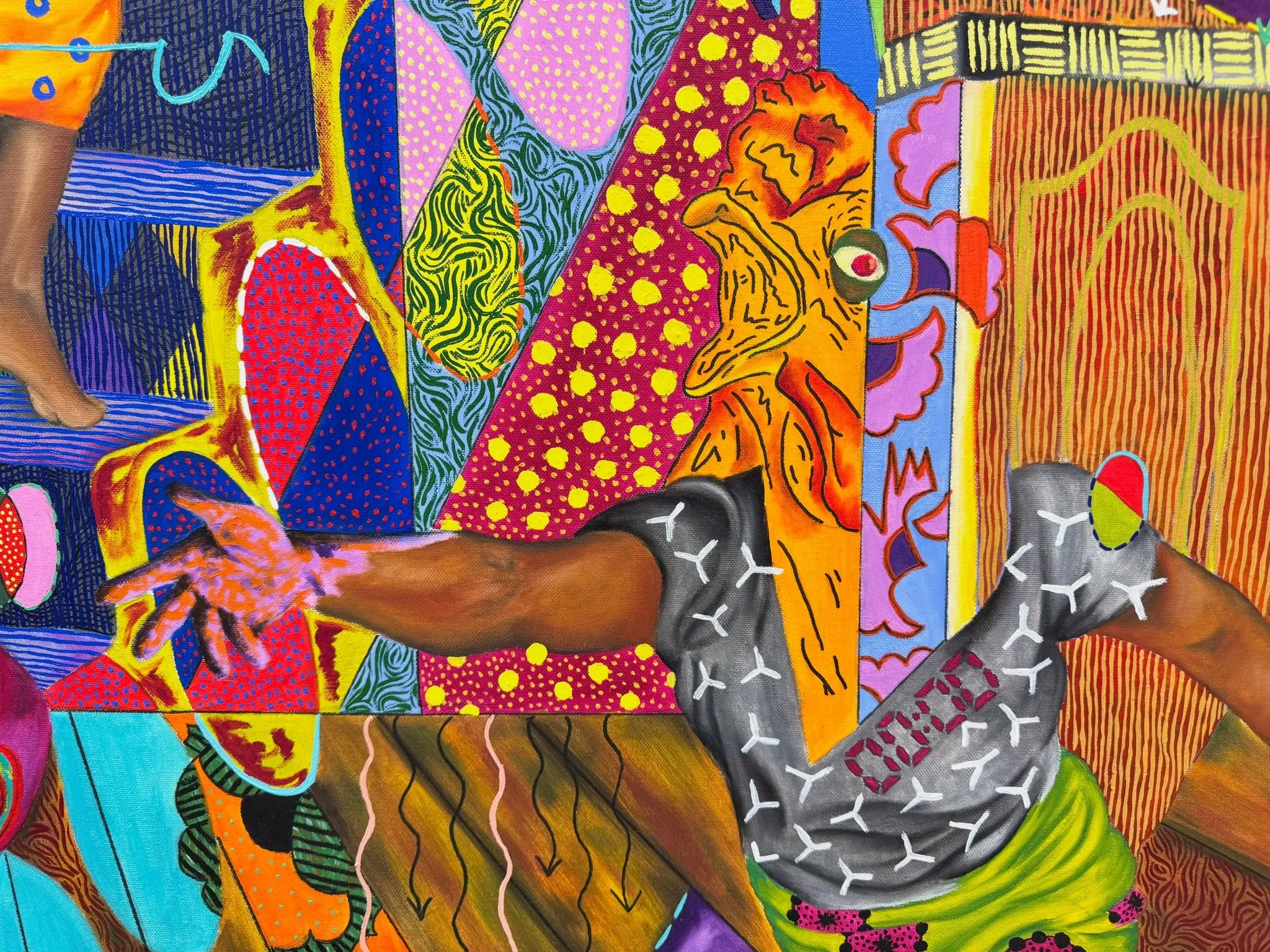
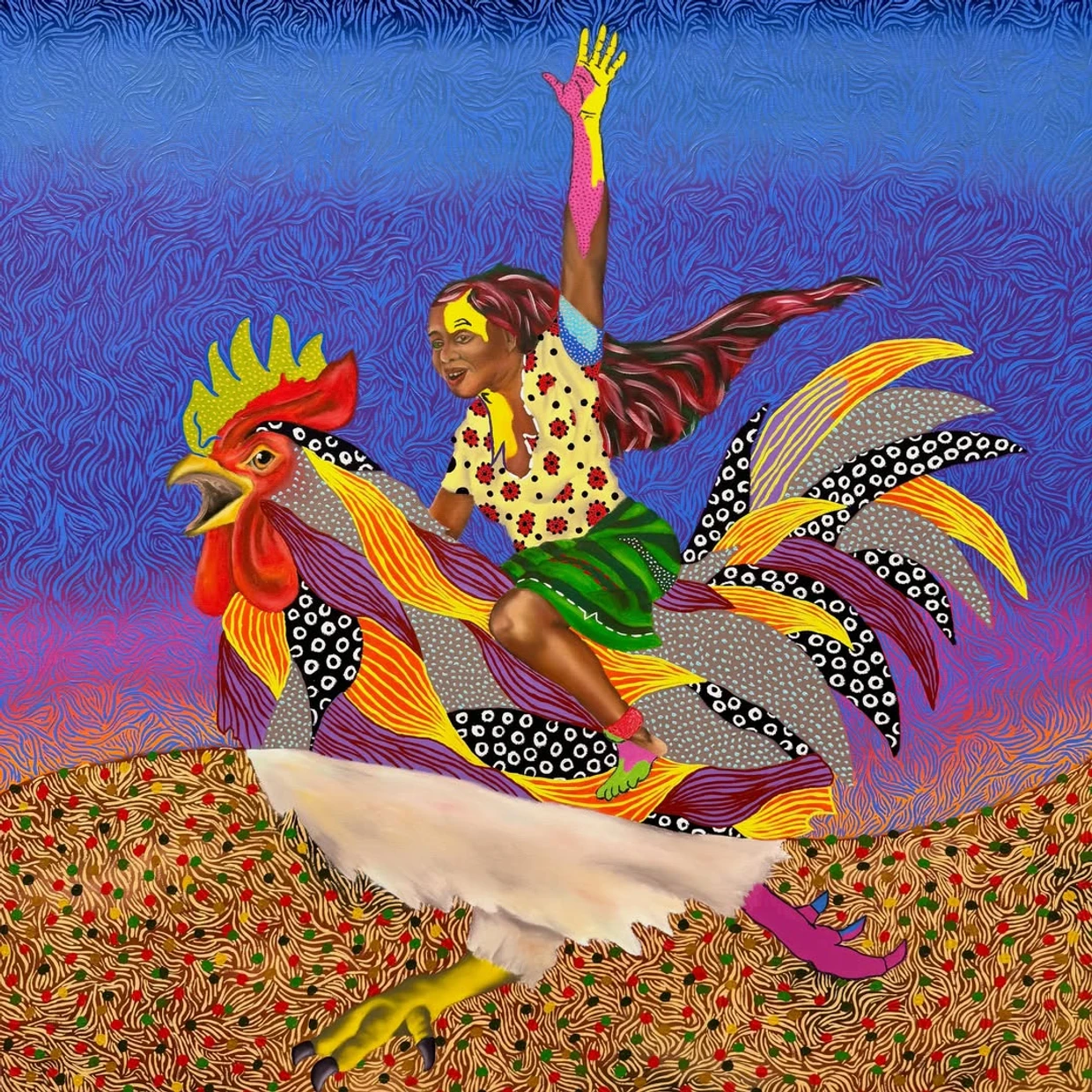
Presented at OCAD University's GradEx 111 exhibition in May 2026, When the Cock Crows traces a progression from precolonial Igbo timekeeping through colonial disruption and resistance to the recovery of Indigenous knowledge. In the painting that gives the series its name, Chimemelie depicts a rooster significantly larger than the human figure beside it, emphasising the bird's importance as a natural timekeeper. Before mechanical clocks became widespread, daily activities could be organised around environmental cues, including the rooster's call. The painting pays attention to the value of these familiar practices, treating them as meaningful systems of knowledge rather than outdated customs. Her use of oil paint, saturated colours, and layered patterns gives the subject a sense of movement and activity, bringing an abstract discussion about time into a recognisable scene.
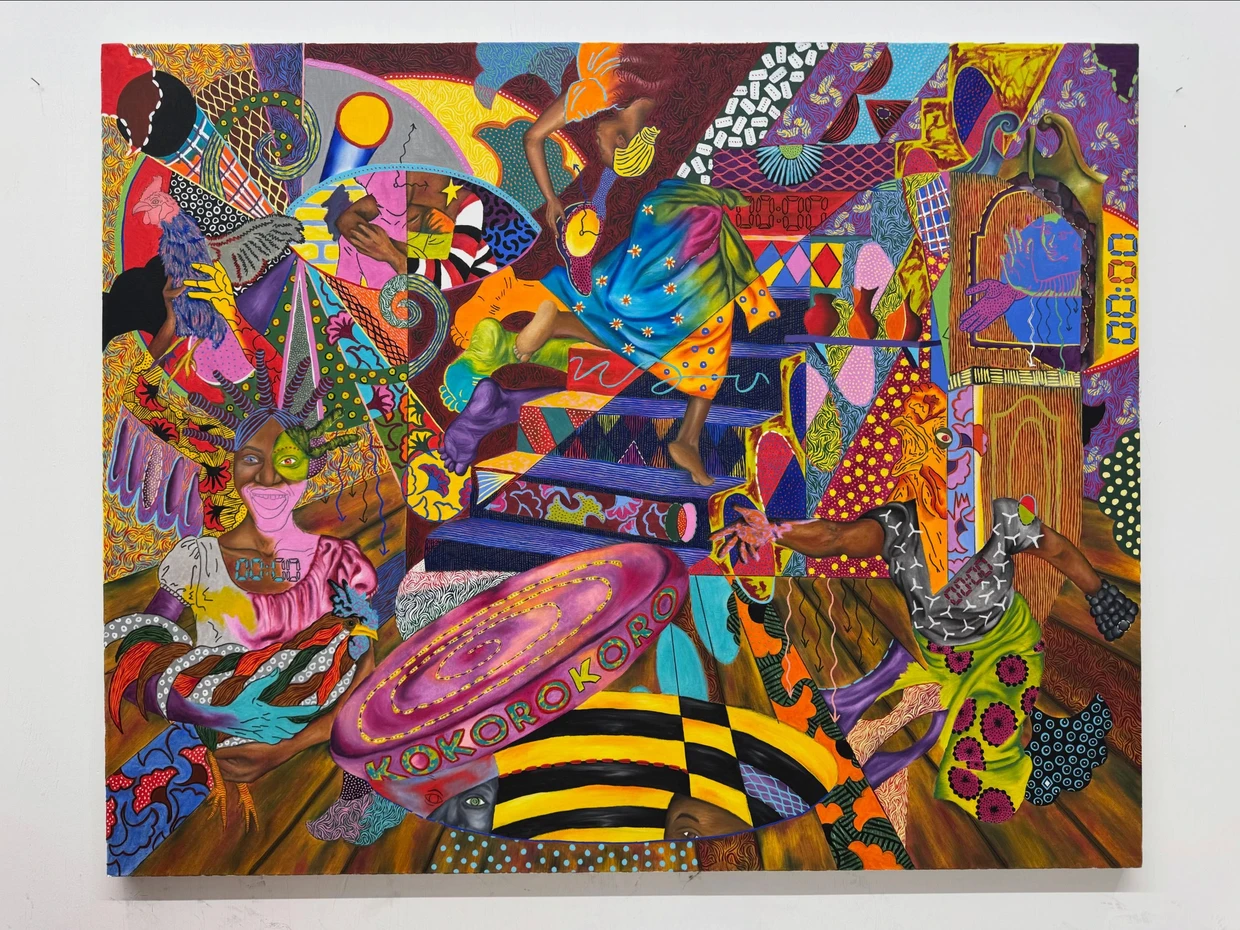
The tension becomes more pronounced in he has won our BROTHERS and our CLAN can no longer act like one, another painting from the series. Here, Chimemelie represents the four traditional Igbo market days—Eke, Orie, Afor, and Nkwo—as human figures positioned beneath mechanical clocks. Instead of moving together, the figures appear to argue, illustrating the disruption caused by the imposition of Western timekeeping. In Things Fall Apart, she develops this contrast through a composition filled with repeating clock hands, the digital time 00:00, and a rooster. Curved forms meet rigid lines, while overlapping marks and patterns create a sense of conflict. The painting's title recalls Chinua Achebe's novel, connecting her exploration of time with a wider history of cultural disruption. Rather than simply presenting two different ways of measuring time, Chimemelie considers what happens when one system is treated as superior and another is gradually pushed aside.
While When the Cock Crows focuses on ancestral knowledge, other paintings turn towards the political and emotional realities of contemporary Nigeria. In The Great Migration (2026), a 30-by-36-inch oil painting, Chimemelie examines why many Nigerians feel compelled to leave the country. She identifies poor governance, economic difficulties, and insecurity as important factors, questioning the distance between the aspirations associated with Nigerian independence and the country's present circumstances. The subject also relates directly to her own experience of living outside Nigeria. She considers what it means to leave home while continuing to carry its memories, frustrations, and attachments. Across her broader practice, Chimemelie frequently incorporates representations of her own face and body into compositions, using personal imagery to explore the different identities people carry and the influence of their family histories. Her paintings move between public histories and private experiences, allowing questions about national identity to coexist with personal reflection.
Chimemelie's work has appeared in several exhibitions across Toronto, including A Black Art Fair at the Nia Centre for the Arts, ALTER/ALTAR at Ignite Gallery, Soft Power, and Mapping Identity at Gallery 1313. In 2026, she graduated from OCAD University with a BFA in Drawing and Painting, receiving recognition that included the BMO Sustainability Award, the Mrs. W.O. Forsyth Award, and the inaugural Parkside People's Choice Award at GradEx 111. She was also selected for the Akin Studio residency through OCAD University's RBC Career Launcher programme. Beyond painting, she explores drawing, collage, and wearable art through Chimecreations, her jewellery practice featuring elaborate, colourful statement pieces. These different forms of making reflect an interest in pattern, ornamentation, and material experimentation that extends across her creative work.
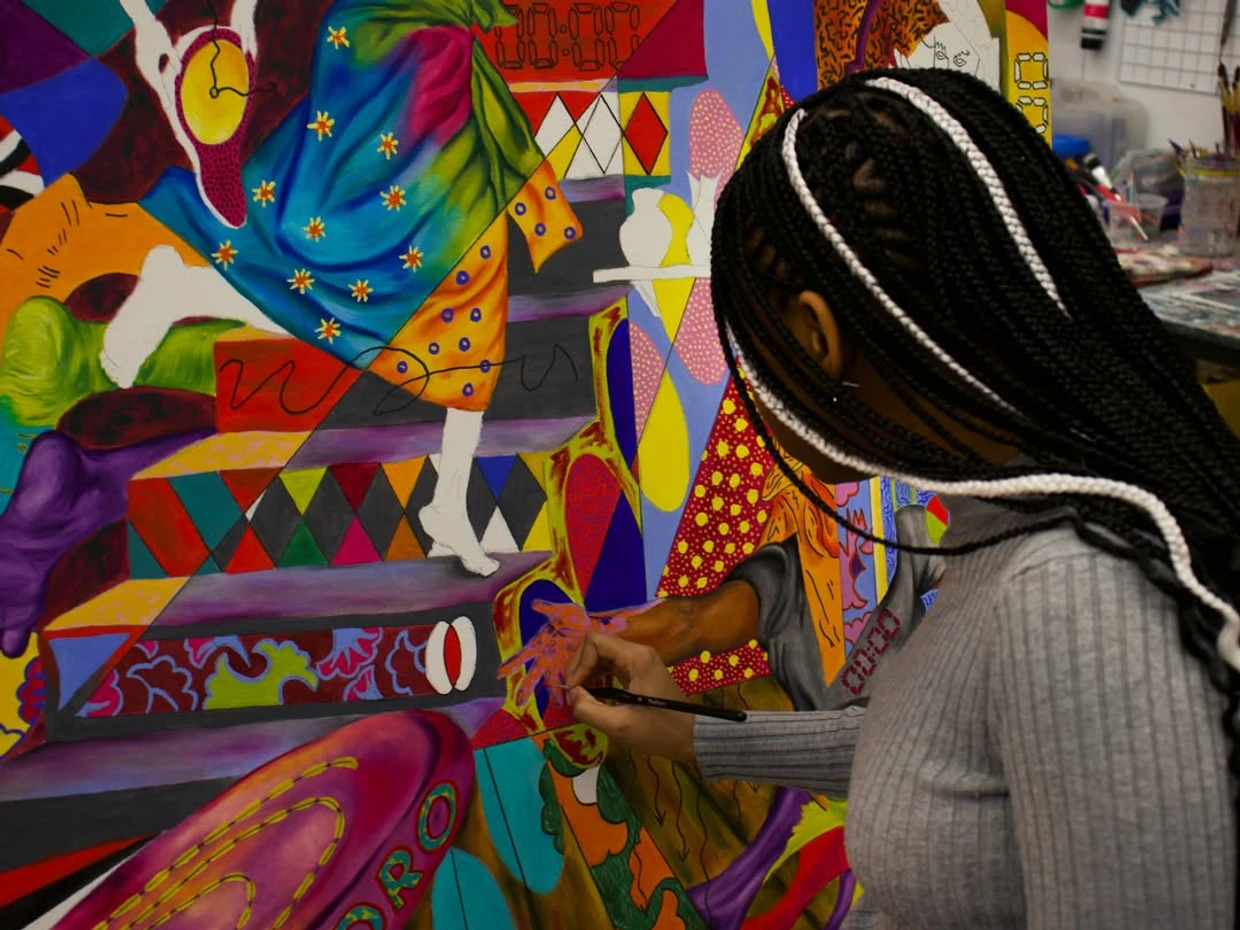
The significance of Chimemelie's work lies partly in the questions that led her to create it. When the Cock Crows began with the discovery that an important part of her own cultural history had been largely absent from her education. Rather than treating that absence as something to accept, she spent a year researching, planning, and painting her way through it. The resulting works offer viewers an introduction to Igbo timekeeping while examining the consequences of colonial influence on cultural knowledge. Her paintings about migration and identity extend those concerns into the present, asking how people understand where they come from and what they carry with them when they leave. For Chimemelie Okafor, painting provides a way to investigate these questions, revisit inherited histories, and make room for ideas that deserve to be remembered.