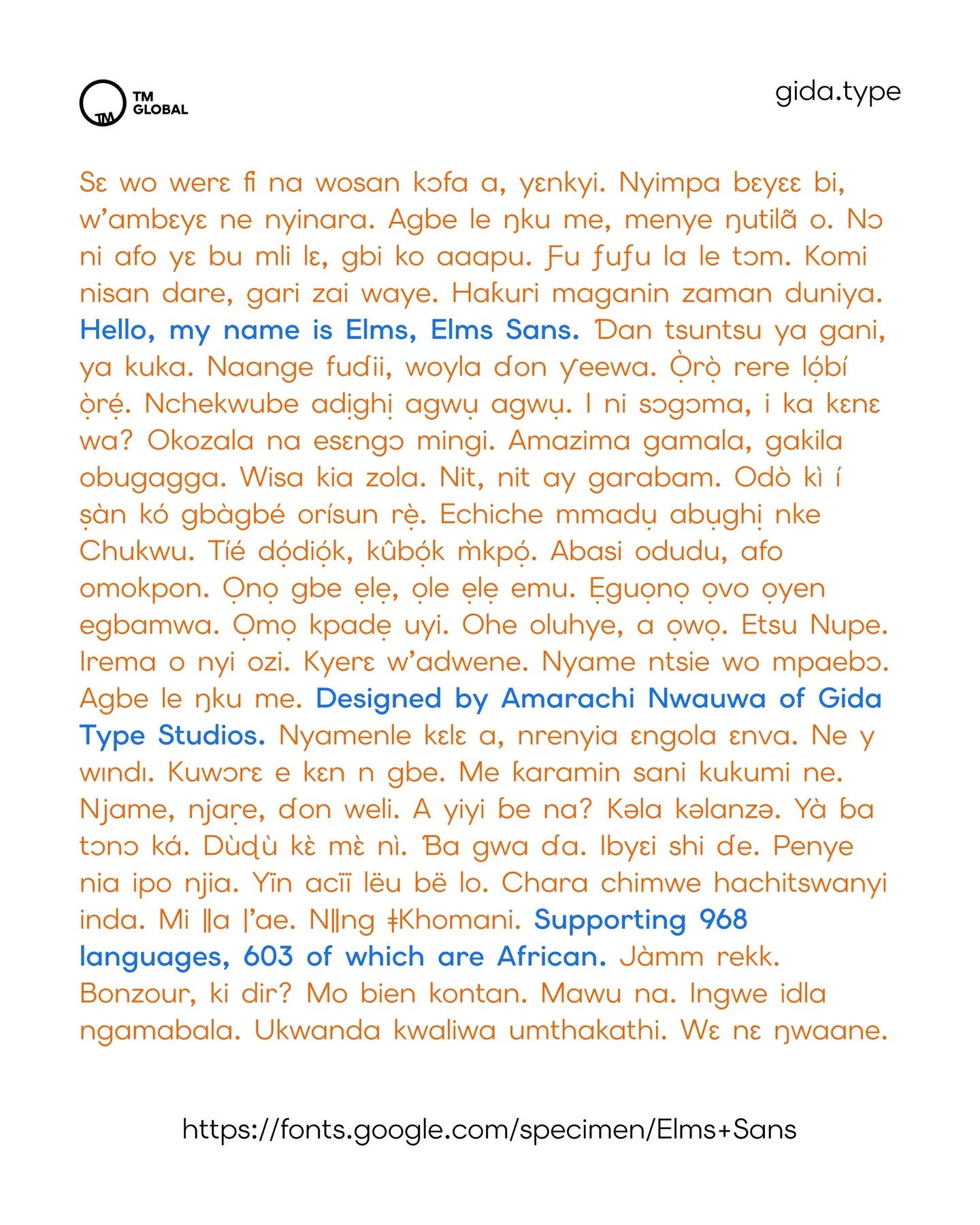


For the African designer, the struggle with typography has always been more than just finding a "nice" font. It’s the frustration of seeing a beautiful layout fall apart the moment you switch from English to a local language. We’ve all been there: you’ve built a stunning brand identity or a sleek UI, but the moment you switch the copy to Yoruba, Igbo, or Hausa, the layout shatters. Those dreaded "tofu" boxes—the blank squares that appear when a font doesn't recognize a character. Amarachi Nwauwa, building through Gida Type Studio and Design Teem, is tackling this head-on with Elms Sans.
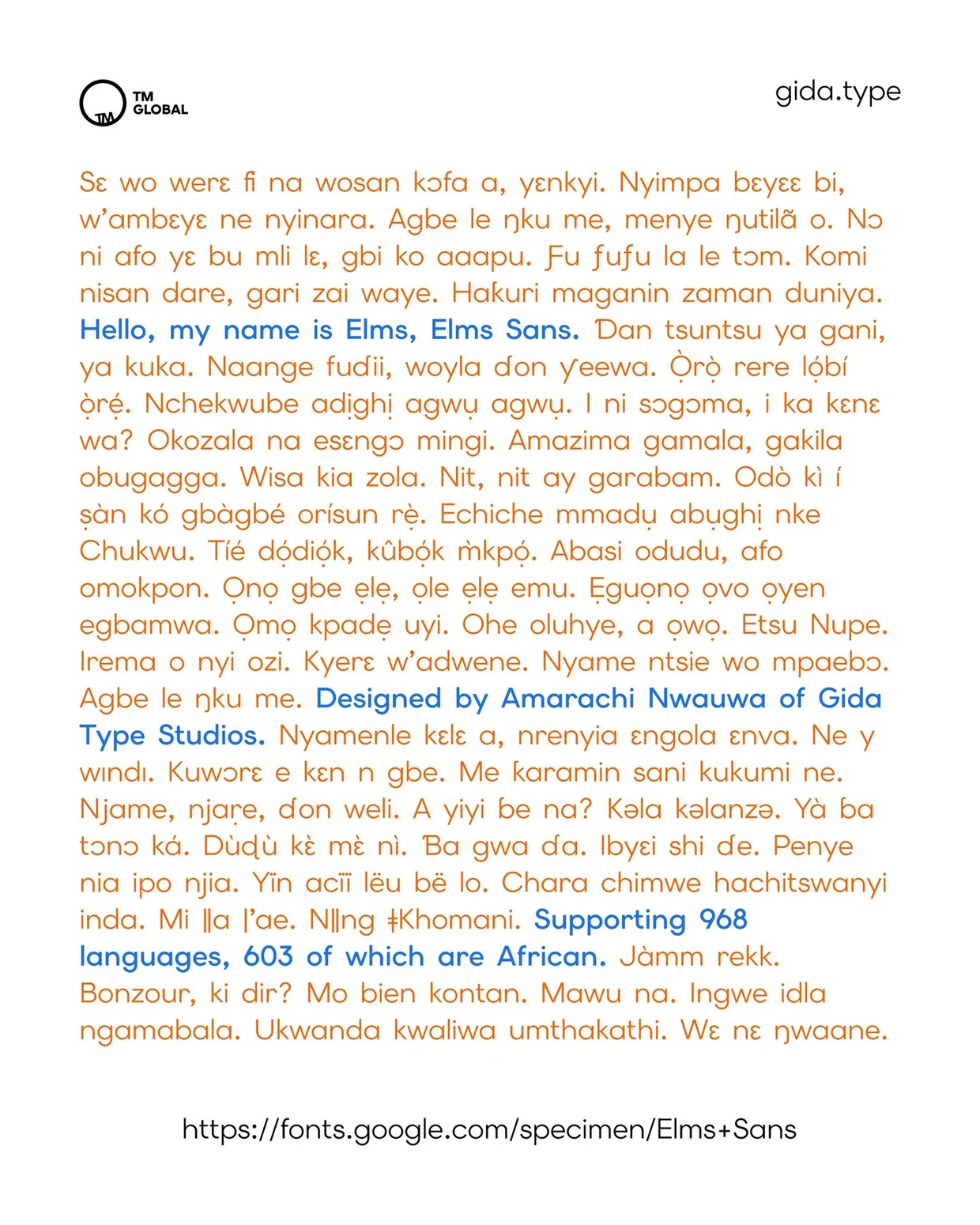
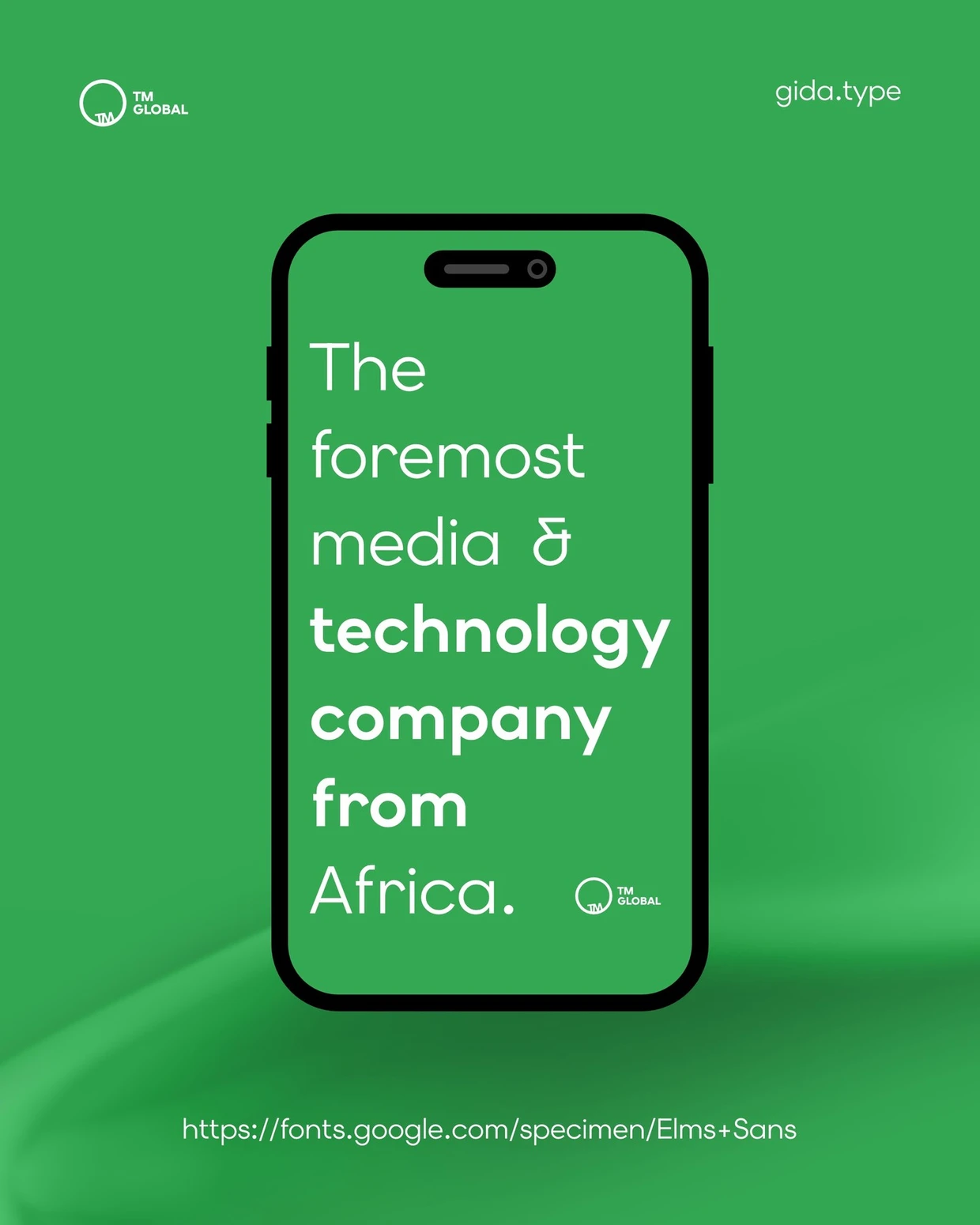
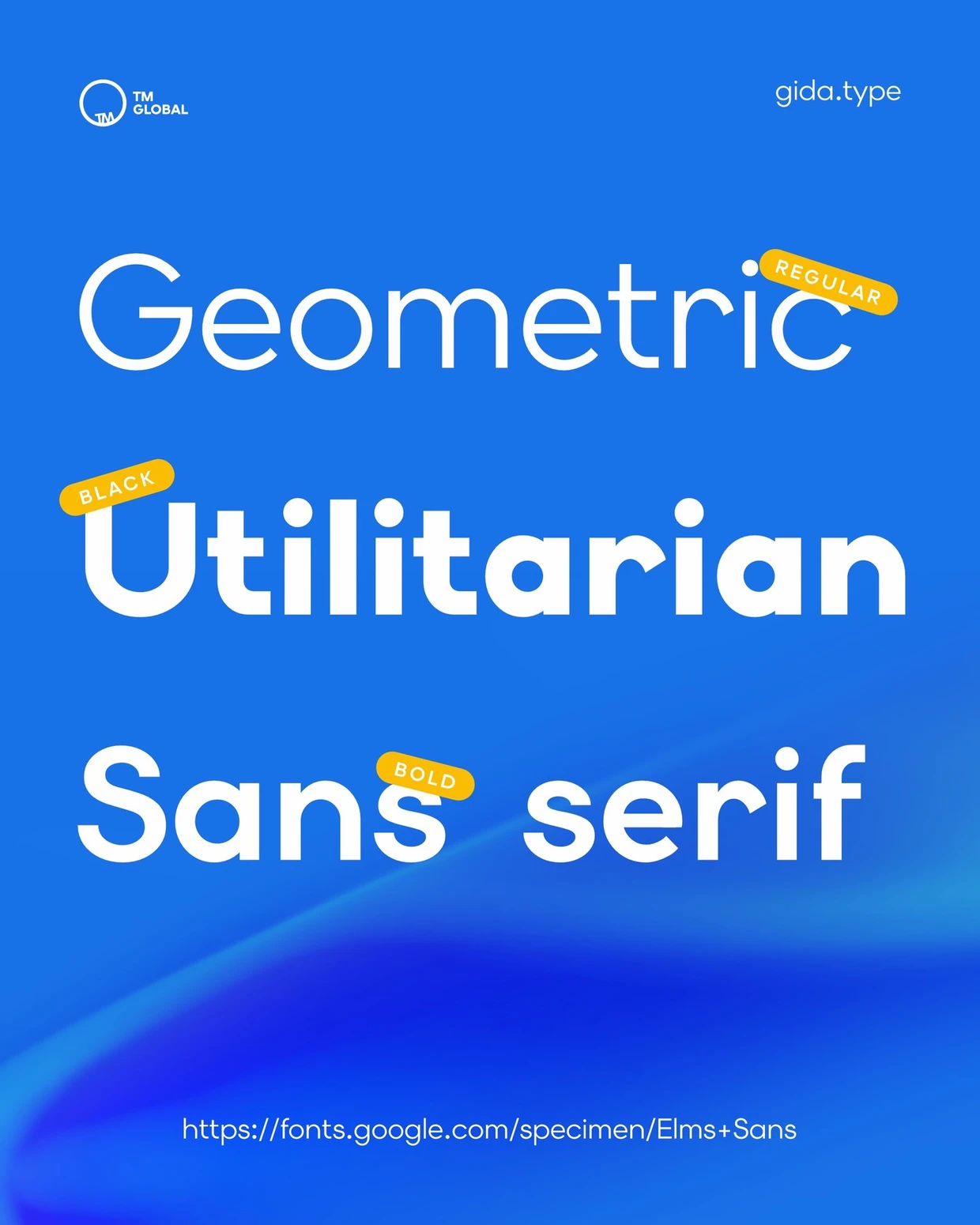
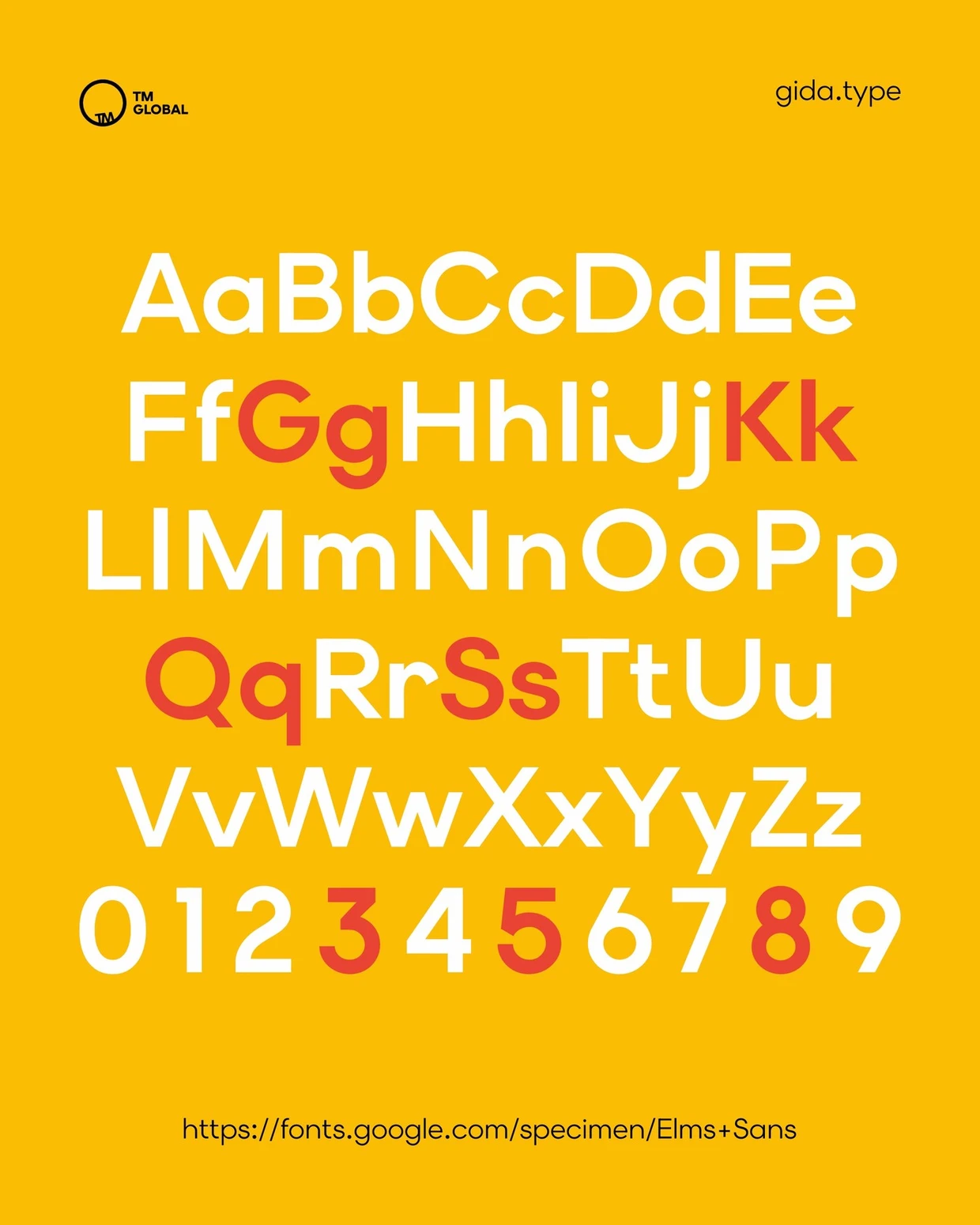
Elms Sans is a utilitarian geometric sans serif designed for the kind of clarity and consistency that modern design systems demand. Drawing from early geometric models, the typeface prioritizes rhythm and openness, bringing a quiet precision to everything from high-resolution digital interfaces to traditional print. While it maintains a functional neutrality, there is a subtle warmth in its proportions that makes it just as effective for bold display headers as it is for long-form body text.
The name "Elms" itself is deeply personal, serving as a tribute to three mentors who shaped Amarachi’s career: Elijah Affi, Makua Afiomah, and Solomon Dawudu. It also draws inspiration from the elm tree—a symbol of craftsmanship and quiet strength. These values are baked into the very DNA of the font, reflecting a commitment to building tools that don't just look good, but stand the test of time.
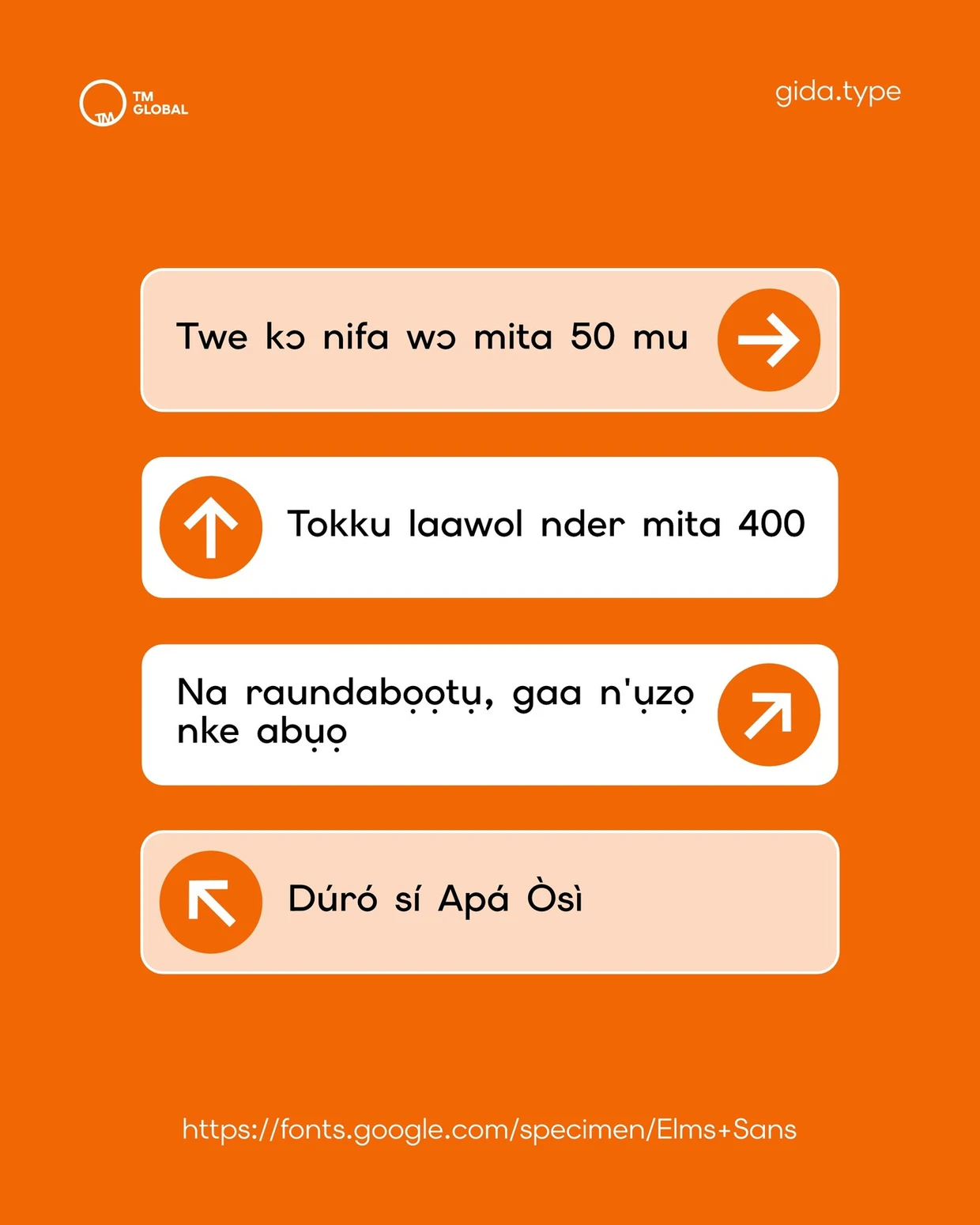
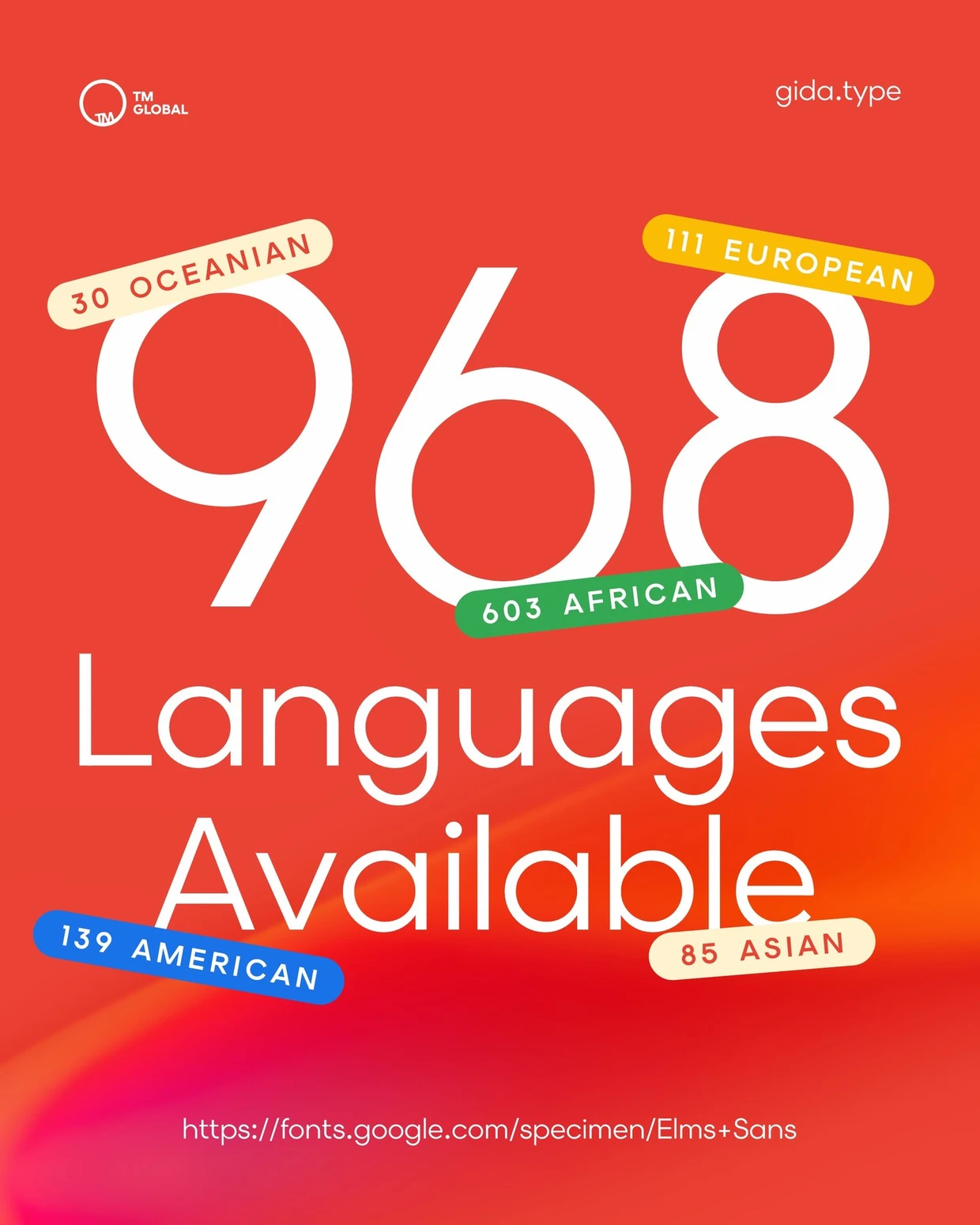
By making Elms Sans open-source and free, Amarachi is removing the barriers that have historically kept our languages in the shadows of digital design. By supporting 603 Sub-Saharan African languages, Elms Sans answers the foundational question driving Gida Type: "What should African design look like in type?" The answer is inclusivity. It’s about ensuring that a designer in Lagos or Nairobi has the same creative freedom as a designer anywhere else in the world, without their mother tongue being a "technical limitation."